Practical oven-care advice

How Often Should You Have Your Oven Professionally Cleaned?

There is no single cleaning interval that suits every household. How often you use the oven, what you cook and how quickly residue builds up all make a difference.
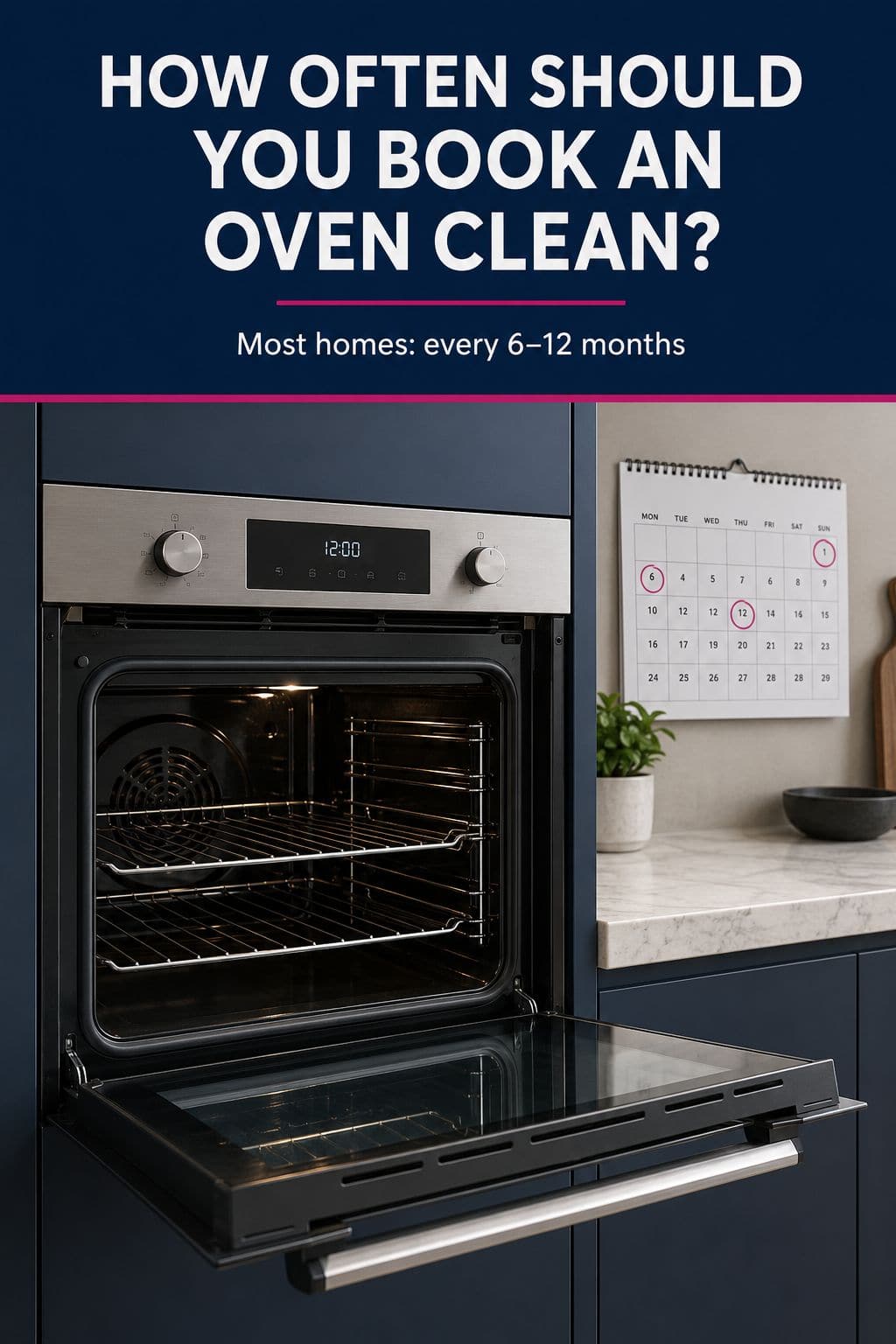
Quick answer: Most households consider a professional oven clean every 6–12 months. Daily cooking, frequent roasting or heavy grease may make a 3–6 month interval more suitable.
Find Your Cleaning Schedule
Clean oven with guidance to book professional oven cleaning every 6 to 12 months

A simple household guide

Choose a Schedule Based on How You Use the Oven

Treat these intervals as practical guidance rather than fixed rules. Visible condition is more important than waiting for a particular date.

Light use

Every 9–12 Months

Suitable when the oven is used once or twice a week and spills are cleaned before they become heavily baked on.

Average household use

Every 6–12 Months

A sensible range for households using the oven several times each week for everyday meals, baking and occasional roasting.

Frequent or heavy use

Every 3–6 Months

Consider shorter intervals when cooking daily, preparing regular roasts or noticing grease and carbon accumulating quickly.

Make each clean last longer: Small maintenance jobs can slow down residue build-up. See our practical oven-care habits between deep cleans .
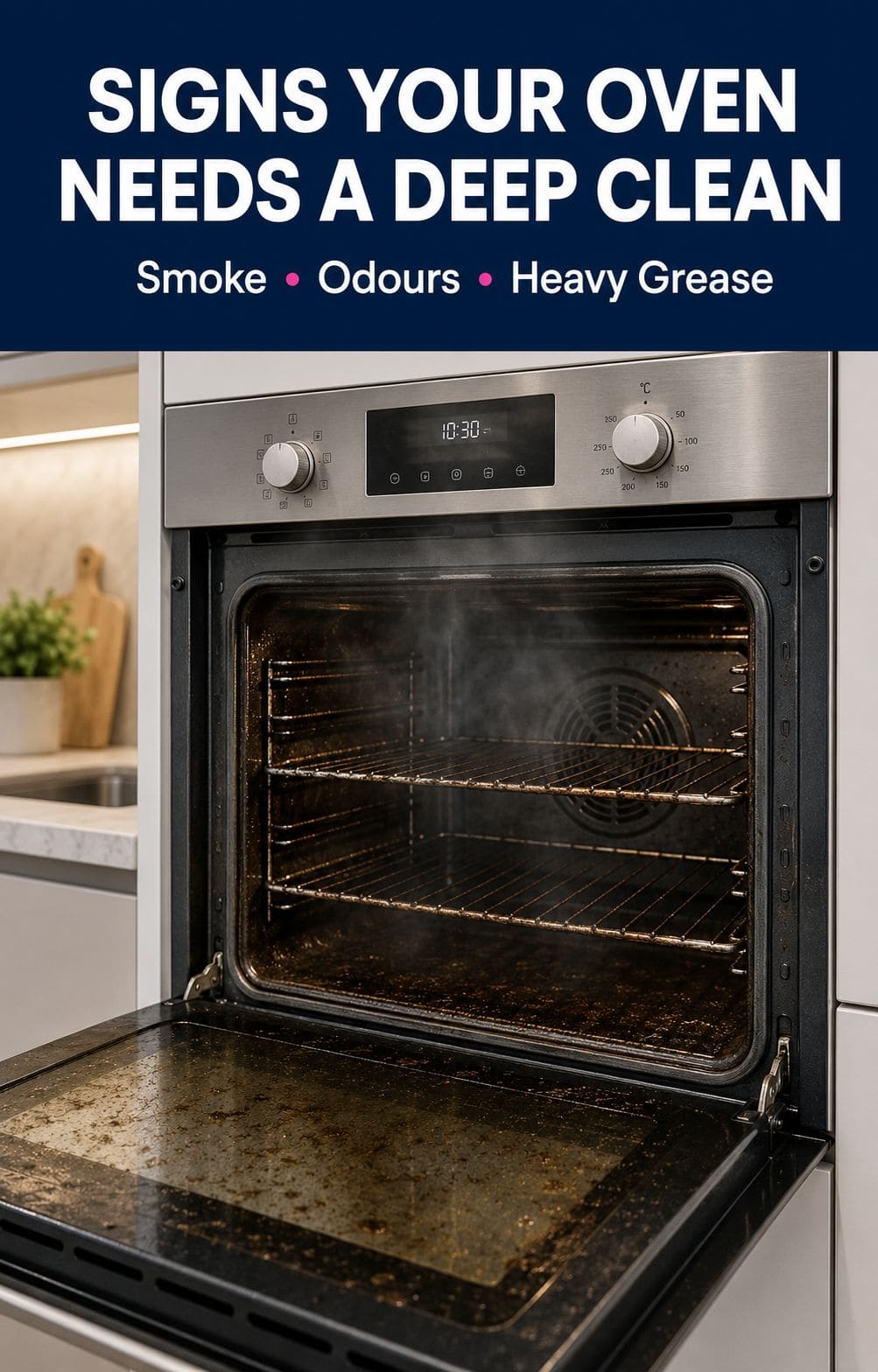
Greasy oven showing smoke odours and heavy grease before deep cleaning

Condition matters more than the calendar

Signs Your Oven Needs a Deep Clean Now

You do not need to wait until six or twelve months have passed. If the oven is already showing several of these signs, cleaning it sooner is the more practical choice.

  • Smoke During Normal Cooking Old grease or food residue may be heating up when the oven is used.
  • Persistent Burnt Odours A smell that remains after the oven has cooled can indicate hidden residue.
  • Heavy Black Deposits Thick carbon on the oven floor, walls, racks or backplate is difficult to remove with a quick wipe.
  • Greasy Door Glass Brown staining or reduced visibility through the door often develops gradually.
  • Dirty Removable Parts Trays, racks, side supports and the backplate may need separate degreasing.
  • Home Cleaning Is No Longer Enough Repeated wiping may not reach grease behind removable components or inside suitable door panels.
If the oven smokes heavily, has damaged wiring, a broken element or another electrical fault, stop using it and contact an appliance engineer. Cleaning does not replace repair work.

More than a surface wipe

What Happens During a Professional Oven Clean?

A thorough visit concentrates on removable components and areas that are difficult to reach during routine household cleaning.

1

Initial Inspection

The appliance is checked before cleaning and existing issues are noted.

2

Careful Dismantling

Suitable racks, trays, side supports, backplates and fan blades are removed.

3

Heated Dip Tank

Removable parts are treated separately in the vehicle to loosen grease and carbon.

4

Interior and Glass

The cavity and accessible door-glass panels are cleaned with surface-suitable, non-caustic products.

5

Reassembly and Check

Components are refitted and the appliance is checked before the work is completed.

Many standard single ovens take around 1½–2 hours. Larger, double or range ovens can take longer depending on their size, design and condition.

View Our Complete Seven-Stage Cleaning Method

Straightforward answers

Professional Oven-Cleaning FAQs

A few final answers to help you decide when your oven is ready for its next thorough clean.

How often should an oven be professionally cleaned?

For many households, every 6–12 months is reasonable. Frequent cooking, roasting and fast grease build-up may make every 3–6 months more suitable.

Does every oven need cleaning every six months?

No. A lightly used and well-maintained oven may not need a professional clean as frequently. Judge the condition as well as the time since the previous clean.

How long does professional oven cleaning take?

Many standard single ovens take approximately 1½–2 hours. Double ovens, range cookers and heavily soiled appliances generally require more time.

What do professional oven cleaners use?

Equipment varies, but our process uses a heated dip tank for suitable removable parts and non-caustic products selected for the appliance surfaces.

Can I use my oven after it has been cleaned?

After our process is completed, the oven is reassembled, checked and ready to use. Your technician will explain anything specific to your appliance.

Should I book sooner if the oven is smoking?

Visible grease or food residue can produce smoke, so cleaning may be needed sooner. Heavy unexplained smoke or an electrical fault should be assessed by an appliance engineer.

Scroll to Top