Summer Home Advice

How to Keep Your Home Cool and Fresh During a UK Heatwave

Hot weather can quickly make bedrooms, living rooms and kitchens feel uncomfortable and stuffy. This practical guide explains how to manage sunlight and airflow, clean dusty fans, freshen household fabrics and prevent unpleasant smells during warmer UK weather.

Practical UK home advice Cooling and cleaning tips Approx. 7-minute read
See the 9 Practical Tips Cleaning, ventilation and everyday home-care guidance
Clean living room with a fan and closed curtains during a UK heatwave
Simple cleaning, ventilation and window-management tips can help a home feel fresher and more comfortable during hot weather.

Start by preventing excess heat from entering the property. Closing sun-facing curtains before rooms become hot can be more effective than trying to cool them afterwards.

The First Four Steps

Control Sunlight, Improve Airflow and Clean Your Fan

You do not always need another appliance. Start by controlling when heat enters, when cooler air comes in and how cleanly your fan moves that air around.

Block Direct Sunlight Before the Room Gets Hot

Close curtains or blinds on windows receiving strong sunlight before the hottest part of the day. It is much easier to slow heat entering than to cool an overheated room later.

  • Close them early
  • Focus on sunny windows
  • Reopen later

Open Windows When the Outside Air Becomes Cooler

Opening every window at midday can bring more hot air inside. Keep them closed when it is hotter outdoors, then open suitable windows in the evening or early morning.

Where safe, use windows on opposite sides of the property to create a gentle flow of air through the home.

  • Check outside temperature
  • Create cross-ventilation
  • Consider security

Clean Your Fan Before It Circulates Dust

Fan guards and blades collect dust, hair and fine debris while stored. Once switched on, that loose dirt may be blown across nearby furniture and fabrics.

Unplug the fan first. Clean only accessible surfaces and remove covers only where the manufacturer confirms it is safe.

Why is my fan blowing dust?

Dust may be sitting on the guard, blades, base or floor around the appliance. Cleaning these areas reduces the loose debris disturbed when the fan starts.

Five-minute fan check

  1. Switch off and unplug it.
  2. Vacuum loose surface dust.
  3. Wipe accessible areas.
  4. Keep moisture away from controls.
  5. Allow parts to dry fully.

Give the Fan Space to Move Air Properly

Do not push the back of the fan against curtains, furniture or a wall. Leave clear space behind it so air can enter freely.

During a cooler evening, position it safely near an open window to help move fresh air into the room. Always keep the base stable and the cable away from walking routes.

  • Use a level surface
  • Keep the rear clear
  • Protect the cable
Next in the guide Cleaning vents, extractor fans, carpets and sofas in hot weather
Continue Reading

A Cleaner, Fresher Home

Clean Ventilation, Fabrics and Odour Sources

Warm weather does not create dirt, but it can make grease, pet smells, food waste and trapped fabric odours much more noticeable.

Clean Vents and Domestic Extractor Fans

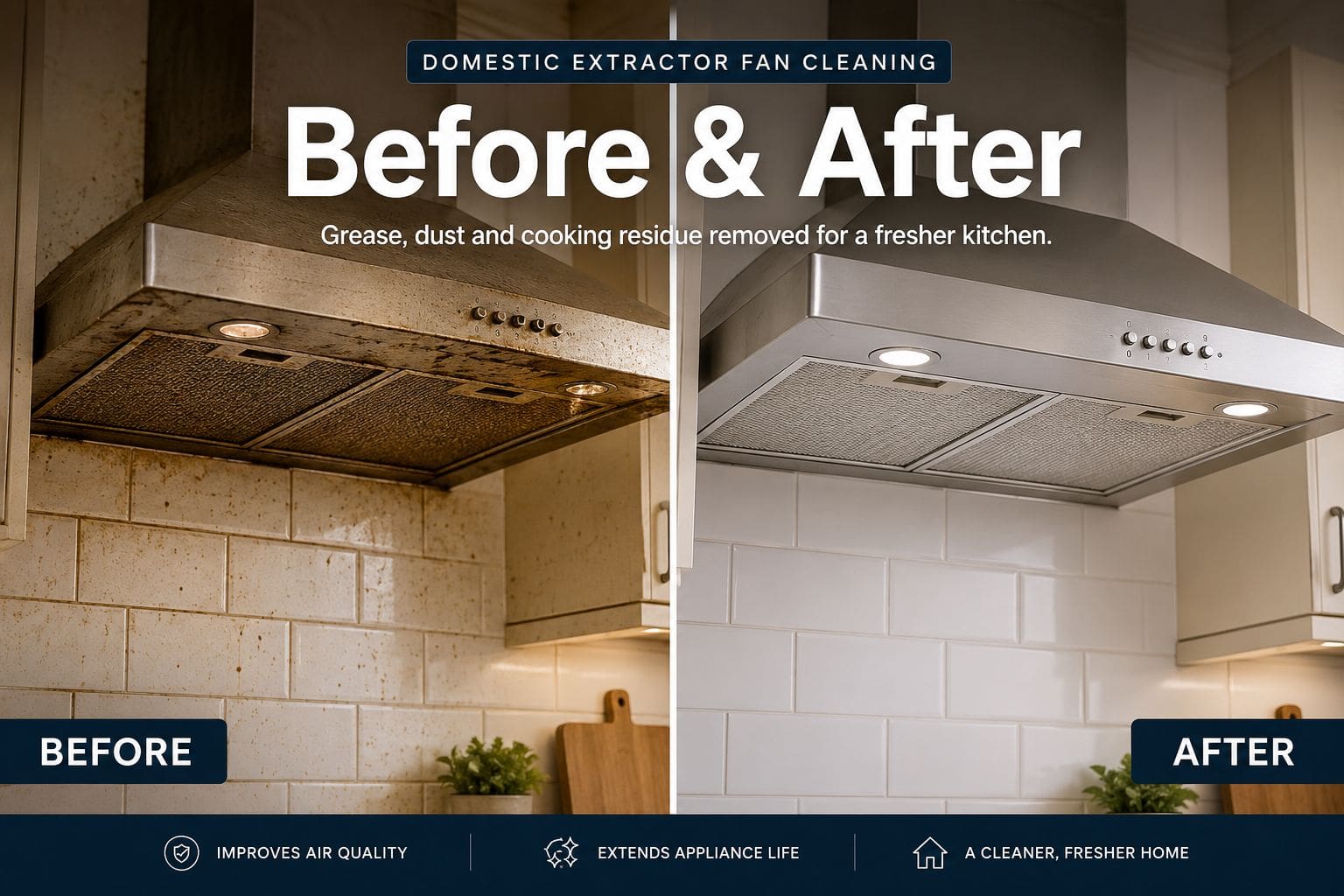
Kitchen extractor filters collect grease, dust and cooking residue. When the buildup becomes heavy, the cooker hood can look dirty and the kitchen may feel less fresh.

Wipe visible exterior surfaces and clean reusable metal filters according to the appliance instructions. Paper and carbon filters are normally replaced rather than washed.

  • Do not block ventilation openings.
  • Check filters for thick grease buildup.
  • Keep moisture away from electrical parts.
  • Replace disposable filters when required.
See our professional extractor fan cleaning service
Domestic kitchen extractor fan before and after professional grease and filter cleaning

Freshen Carpets and Sofas

Carpets and fabric furniture can hold dust, crumbs, pet hair and everyday odours. Vacuum more regularly during summer, especially when doors and windows are being left open.

Use the correct upholstery attachment and clean beneath removable cushions. Avoid soaking fabrics with household sprays, as excessive moisture may create further odour or drying problems.

Stop Household Smells at the Source

Food waste, pet areas and greasy cooking surfaces can smell stronger during warm weather. Instead of covering the problem with fragrance, remove the source and clean the surrounding area.

  • Empty food bins regularly
  • Wash the bin lid and rim
  • Clean pet bedding and bowls
  • Check old food in the fridge
  • Wipe greasy cooking surfaces
  • Remove crumbs from furniture
Next in the guide Fresh bedding and a quick heatwave cleaning checklist
Continue Reading

Final Everyday Steps

Freshen Bedding and Follow This Heatwave Home Checklist

The final steps are simple: keep frequently used fabrics fresh, remove avoidable odour sources and repeat a few small jobs throughout the hottest days.

Freshen Bedding and Washable Fabrics

Pillowcases, sheets, lightweight throws and removable cushion covers may need washing more regularly during hot weather. Always follow the care label rather than using one temperature or method for every fabric.

Allow washed items to dry completely before putting them back onto beds, sofas or mattresses. Damp fabric can create a stale smell and make the room feel less comfortable.

  • Change pillowcases regularly
  • Wash removable covers
  • Use lighter bedding
  • Dry fabrics fully

Quick Heatwave Cleaning and Cooling Checklist

Use this list in the morning and again when the outdoor air becomes cooler later in the day.

Close sun-facing curtains Block strong sunlight before rooms become overheated.
Check windows at the right time Open them when the outdoor air becomes cooler and it is safe.
Unplug and dust the fan Remove visible dust from guards, bases and nearby surfaces.
Keep airflow clear Do not block the back of fans, vents or extractor points.
Vacuum carpets and sofas Remove dust, crumbs, loose hair and pet debris.
Check extractor filters Clean reusable filters or replace disposable ones as required.
Empty food and household bins Wash the lid, rim and surrounding floor when needed.
Freshen bedding and throws Wash suitable fabrics and let them dry completely.
Clean pet areas Refresh bedding, bowls and litter areas before odours build up.
Switch off unused appliances Reduce unnecessary heat from lights and electrical equipment.
Final section Frequently asked questions, related cleaning advice and summer booking
Continue Reading
Scroll to Top