Real professional cleaning job

Human Faeces Carpet Cleaning After a Medical Incident

Following a medical incident at a residential property, we were called to deal with significant faecal contamination affecting a stair and landing carpet. The affected areas were carefully treated before the carpet was professionally cleaned, sanitised and deodorised. This real job shows what can happen when biological contamination reaches carpet fibres, why fast treatment matters, and why some staining can be more difficult to remove than an everyday household spill.
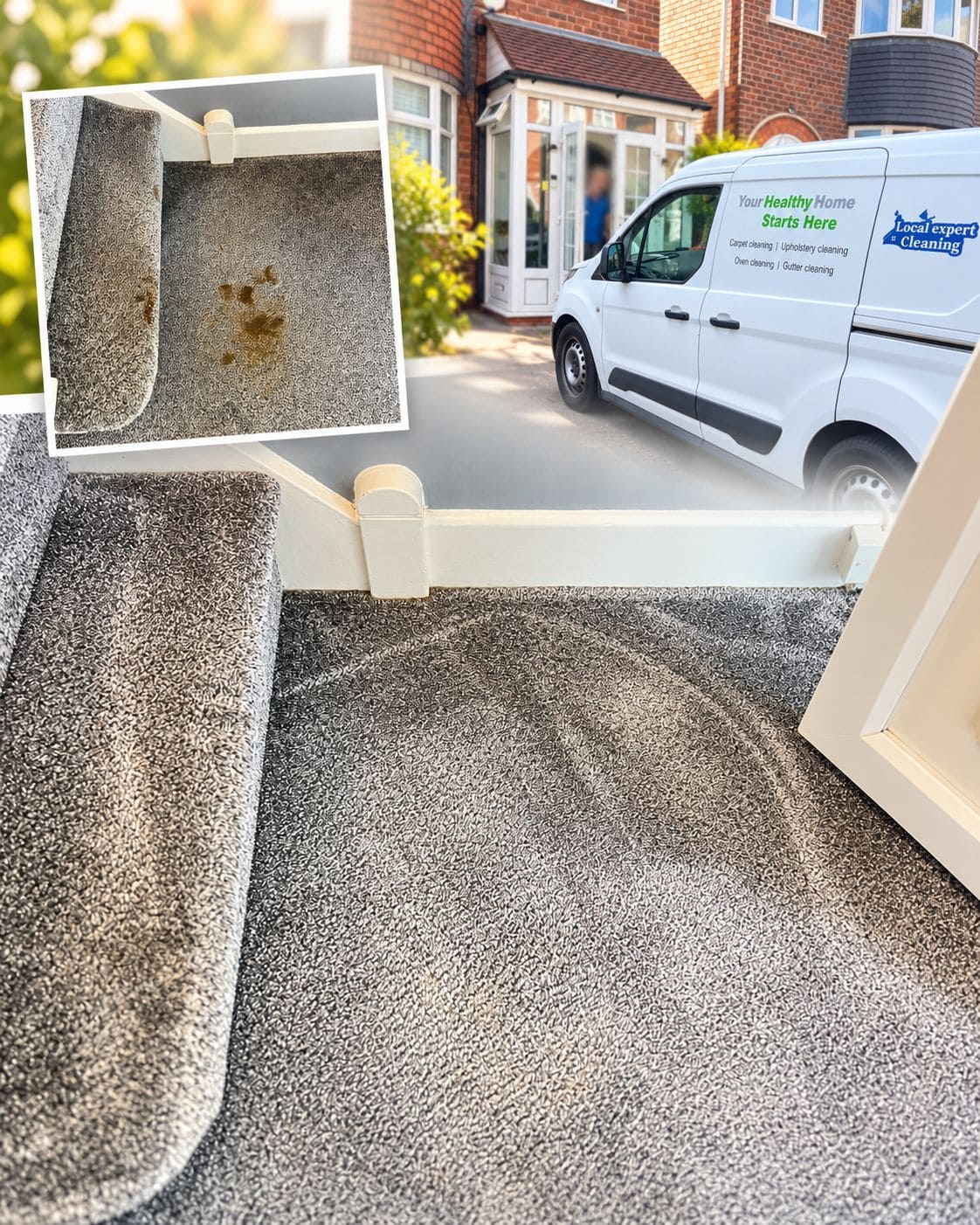
About this article: This is a genuine carpet cleaning case study using photographs from the actual job. Personal and property-identifying details have been protected for privacy.
Jump to the most useful sections:
Professional carpet cleaning after human faeces contamination, showing before and after results from a real cleaning job
Real cleaning result Professional treatment following faecal contamination
Professional carpet cleaning Contaminated stair and landing carpet treated and extracted.
Sanitised & deodorised The affected carpet was treated to improve hygiene and reduce odour.
Real before & after evidence Original photographs from the actual residential cleaning job.
The real job

What Happened at the Property?

We attended a residential property after a family member had recently returned home following hospital treatment for a bowel-related medical problem. After returning home, they experienced an unexpected bowel accident which caused faecal contamination to the stair and landing carpet.

By the time we arrived, the contamination had affected more than just the surface appearance of the carpet. Solid material first had to be carefully removed before the carpet could be professionally treated. Because this type of contamination contains a high level of moisture and organic material, it can work deeper into the carpet pile and may also reach the backing if it is left untreated.

Our priority was to deal with the affected areas in a controlled way, reduce the visible contamination, and then carry out the appropriate professional carpet cleaning, sanitising and deodorising treatment.

Why quick action matters

The sooner faecal contamination is professionally treated, the better the chance of reducing permanent staining, odour and deeper contamination within the carpet fibres or backing.

✓
Real residential carpet cleaning job
✓
Stair and landing carpet affected
✓
Physical contamination removed first
✓
Carpet cleaned, sanitised and deodorised
Local Expert Cleaning van outside a property during carpet cleaning after a medical incident
On site for the real job Customer and property-identifying details have been protected for privacy.
Local Expert Cleaning attending the residential property following the medical incident.
Respecting the customer's privacy

This case study describes the circumstances only to explain the cleaning challenge. We are not identifying the resident, providing a medical diagnosis or stating which medication was used. The medical side of this article is discussed only in general terms using trusted health guidance.

Before professional cleaning

The Condition of the Carpet When We Arrived

The contamination was clearly visible across the stair and landing area. This was not a normal household stain: it involved biological material that had come into direct contact with the carpet and needed to be dealt with carefully before deeper cleaning could begin.
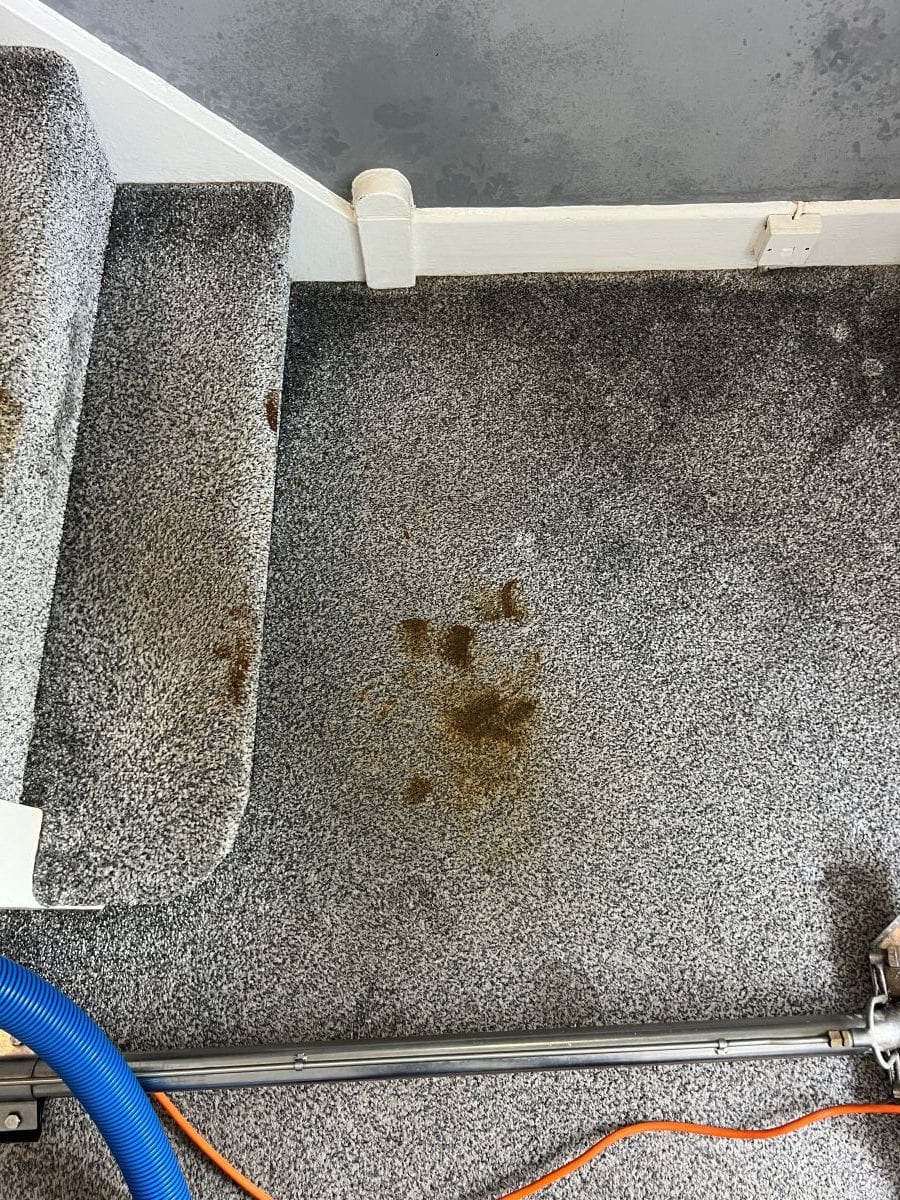
Human faeces staining on stair and landing carpet before professional cleaning
Before cleaning
The affected stair and landing carpet before professional cleaning, sanitising and deodorising.

Why this type of contamination needs more than ordinary spot cleaning

Human waste contains moisture and organic material that can move beyond the visible surface of the carpet. If it remains in place, it can work further into the pile and may reach the carpet backing or underlay, depending on the amount of contamination and how long it has been there.

In this job, we first needed to deal with the physical contamination before moving on to the professional cleaning stage. Treating the carpet in the correct order is important because simply scrubbing the visible marks can spread contamination further and may push material deeper into the fibres.

1
Visible contamination Solid and liquid contamination had affected the surface of the stair and landing carpet.
2
Potential deeper penetration Moisture can travel below the carpet pile and into the backing if treatment is delayed.
3
Staining and odour risk Organic contamination can leave visible discolouration and unpleasant odours if not treated promptly.
Important:

This is why we advise customers not to scrub the area or apply random household chemicals before professional treatment. Fast, controlled cleaning gives the best chance of reducing staining, odour and damage to the carpet.

Not a standard stain Biological contamination requires more care than a normal food or drink spill.
Time matters The longer contamination remains, the greater the chance it can penetrate deeper.
Correct treatment order Physical contamination should be addressed before professional extraction and sanitising.
Understanding the circumstances

Can Treatment for Constipation Lead to a Bowel Accident?

It can happen. We do not know which medication was prescribed in this particular case, so we cannot say exactly what caused the accident. However, NHS guidance explains that severe constipation and some treatments used for constipation can be associated with loose stools, diarrhoea or increased bowel activity.

Severe constipation can be more complicated than simply being unable to go to the toilet

Long-term constipation can sometimes result in faecal impaction. This is when a build-up of hard stool becomes stuck in the rectum. NHS guidance explains that one possible symptom is diarrhoea or liquid stool leaking around the build-up.

Laxatives are also commonly used to treat constipation. Different types work in different ways. For example, osmotic laxatives such as macrogol bring more water into the bowel to soften the stool, while stimulant laxatives such as senna encourage the bowel muscles to move stool along.

Some laxatives can cause diarrhoea as a side effect. This means that a person who has recently been treated for constipation may sometimes experience a sudden change in bowel activity. That does not allow us to determine what happened medically in this individual case, but it explains why situations like this can occur.

1
Constipation develops Stool may become hard and difficult to pass, and severe cases can lead to faecal impaction.
2
Treatment may be prescribed Depending on the circumstances, healthcare professionals may use laxatives or other treatments.
3
Bowel activity can change Loose stool or diarrhoea can occur with some constipation treatments or around an impaction.
+

What does the NHS say about faecal impaction?

NHS guidance states that long-term constipation can lead to faecal impaction, where stool builds up in the rectum. Liquid stool or diarrhoea can sometimes leak through the build-up.

Read NHS constipation guidance →

i

Can laxatives cause diarrhoea?

Yes. The NHS lists diarrhoea as a possible side effect of medicines including macrogol and senna. This does not mean every person taking a laxative will experience it.

Read NHS laxative guidance →

!
We are not saying medication caused the carpet staining.

Medication or treatment may help explain why an unexpected bowel accident occurred, but there is not enough information to say that medication itself caused the faint yellow discolouration seen in the carpet. Residual staining can instead be associated with organic pigments, contamination penetrating deeper into the carpet, fibre colour change or material returning towards the surface as the carpet dries.

Professional treatment process

How We Cleaned, Sanitised and Deodorised the Carpet

This job needed a controlled cleaning process rather than ordinary spot cleaning. We first dealt with the physical contamination, then professionally cleaned the affected stair and landing carpet before carrying out sanitising and deodorising treatment.

01

Careful removal of physical contamination

The first stage was to remove the solid contamination carefully so that it was not unnecessarily spread across a wider area of the carpet.

02

Assessment of the affected carpet

We checked the stair and landing areas to identify where the visible contamination had reached and where deeper treatment was required.

03

Professional carpet cleaning

The affected carpet was professionally cleaned to lift contamination and residue from the carpet fibres rather than simply masking the appearance of the marks.

04

Sanitising treatment

After cleaning, the treated areas were sanitised as part of the overall process to improve hygiene following the biological contamination.

05

Deodorising the carpet

The carpet was also deodorised to help deal with unpleasant odour associated with the contamination and leave the treated areas fresher after cleaning.

Why the order matters

Removing contamination first helps the deeper cleaning stage work properly

With faecal contamination, the visible material should not simply be scrubbed into the carpet. The physical contamination needs to be dealt with first, followed by professional cleaning and treatment of the affected fibres.

✓
Physical contamination addressed before deeper cleaning
✓
Carpet professionally cleaned rather than surface wiped
✓
Sanitising included as part of the treatment
✓
Deodorising used to help with residual odour
Professional treatment does not always mean every trace of colour will disappear.

Biological contamination can sometimes alter the appearance of carpet fibres or penetrate deeper than the visible surface. The next section shows the actual result from this job and explains why a very faint yellow shadow can sometimes remain after cleaning.

!
If this happens at home, avoid scrubbing or applying random household cleaners.

Rubbing can spread contamination further, while unsuitable chemicals may affect the carpet colour or make professional treatment more difficult. Where possible, deal only with loose solid material safely and arrange professional cleaning as soon as you can.

After professional treatment

The Result After Cleaning, Sanitising and Deodorising

The difference after treatment was significant. The heavy visible contamination was removed, the affected carpet was professionally cleaned, and the treated areas were sanitised and deodorised as part of the overall cleaning process.
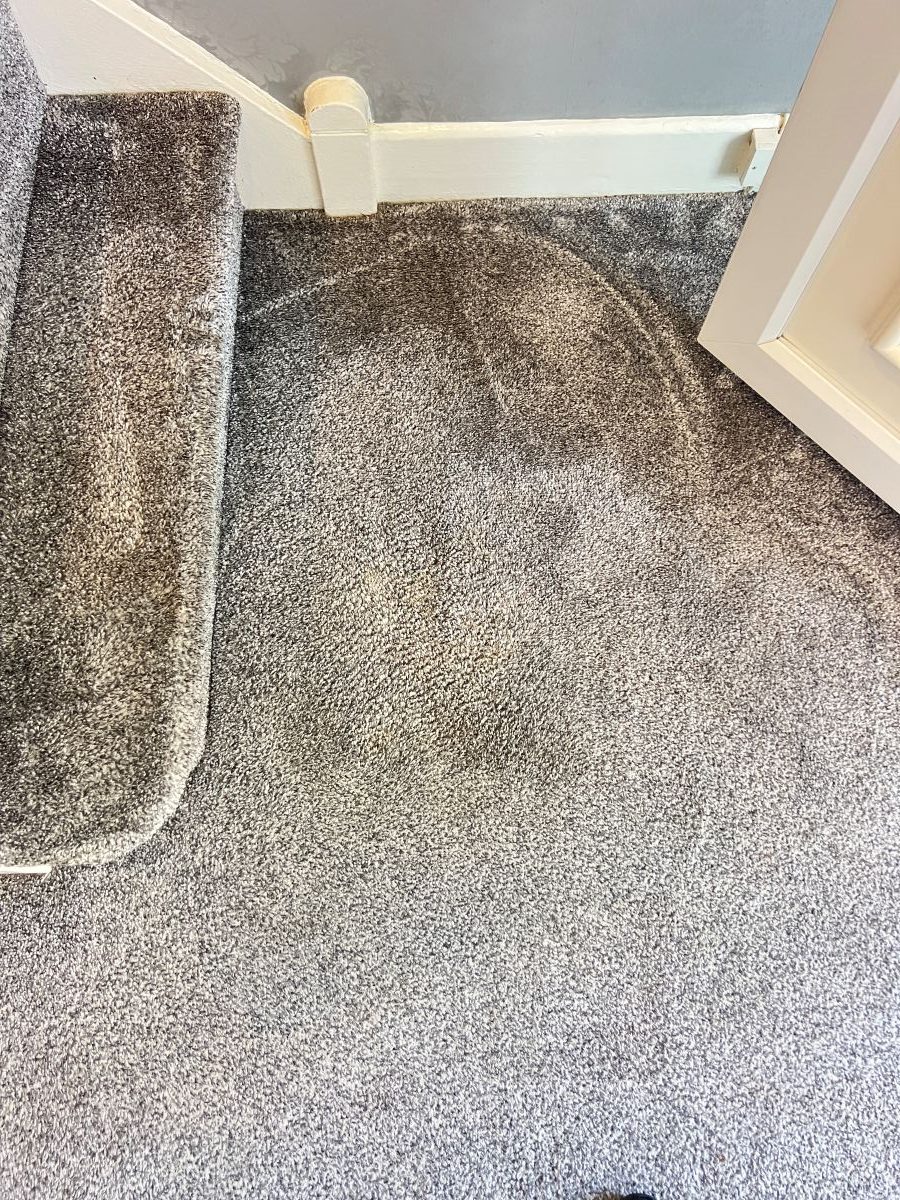
Stair and landing carpet after professional cleaning, sanitising and deodorising following faecal contamination
After cleaning
The same stair and landing carpet after professional cleaning, sanitising and deodorising.

A major improvement, with an honest explanation of the remaining faint shadow

As the after photograph shows, the heavy brown contamination was removed and the appearance of the stair and landing carpet improved substantially.

However, in part of the original affected area, a very faint yellow-toned shadow could still be seen. With this type of biological contamination, that does not necessarily mean that the carpet has not been cleaned properly.

Organic material can sometimes leave pigmentation behind, affect the colour of the carpet fibre, or penetrate more deeply than the visible pile. The amount of contamination, the carpet fibre, how long it remained in place and whether anything was applied before professional cleaning can all affect the final appearance.

Why we show the real result

We prefer to show genuine before-and-after photographs rather than over-editing the image or claiming that every biological stain can always be removed completely. Professional cleaning can achieve a major improvement, but permanent colour change is sometimes possible.

✓
Heavy visible contamination removed
✓
Carpet professionally cleaned
✓
Affected areas sanitised
✓
Carpet deodorised after treatment

Does a faint yellow mark mean the medication damaged the carpet?

We cannot make that conclusion. Medication or treatment may help explain why a bowel accident occurred, but there is not enough evidence to say that medication itself chemically damaged or bleached the carpet.

What is more likely to explain the remaining discolouration?

Possible explanations include organic pigments remaining in the fibres, deeper contamination, changes to the carpet colour, or residue moving back towards the surface as the carpet dries. The next section explains these possibilities in more detail.

Every contaminated carpet is different.

Results depend on the type of carpet, depth of contamination, time before treatment and any products previously used. This is why we assess the carpet before making promises about complete stain removal.

Understanding residual staining

Why Can Yellow or Brown Marks Remain After Cleaning?

A carpet can be professionally cleaned and still show a faint shadow where heavy biological contamination was previously present. This does not automatically mean contamination has been left behind. In some cases, the original incident can affect the colour or appearance of the carpet fibres themselves.

01

Organic pigments

Biological contamination contains naturally occurring pigments and organic material. Some colour can remain attached to carpet fibres even after the bulk contamination has been removed and the carpet has been professionally cleaned.

02

Deeper penetration

Liquid contamination can travel below the visible face fibres. Depending on the amount, time and carpet construction, it may reach deeper into the pile, backing or even the underlay.

03

Fibre colour change

Some stains do more than sit on the surface. They may alter the appearance of the carpet fibre, which means complete colour restoration cannot always be guaranteed through cleaning alone.

04

Products used before cleaning

Bleach, strong disinfectants, stain removers or other household chemicals can sometimes affect the carpet colour or make a difficult stain harder to assess when professional cleaning later takes place.

Another possible cause

What is carpet wick-back?

Sometimes a stain appears lighter immediately after cleaning but becomes slightly more noticeable again as the carpet dries. This can happen when moisture or dissolved residue from deeper within the carpet moves back towards the surface during the drying process.

✓ Contamination may sit deeper than the visible carpet pile
✓ Moisture can move upwards while the carpet is drying
✓ A faint mark may become more noticeable after drying
Does a faint shadow mean the carpet is still dirty?

Not necessarily. There is a difference between removable contamination and permanent discolouration. A carpet fibre can remain slightly altered in colour even after the contamination has been professionally removed and the area has been cleaned, sanitised and deodorised.

✓
This is why we do not promise 100% stain removal before assessing the carpet.

Our aim is always to achieve the best possible result, but heavy biological staining can sometimes cause permanent colour change. We would rather explain this honestly than promise that every carpet stain will disappear completely.

The medication itself should not automatically be blamed for the remaining yellow mark.

Although treatment for constipation can sometimes contribute to loose stools or increased bowel activity, there is not enough evidence in this case to say the medication chemically damaged the carpet. The faint remaining colour is more reasonably discussed as residual pigmentation, deeper contamination, fibre colour change or possible wick-back.

What to do straight away

What Should You Do If Faecal Contamination Gets Onto Carpet?

The first few actions can make a real difference. Avoid aggressive DIY cleaning and try not to spread the contamination further. The sooner the affected carpet can be assessed and treated, the better the chance of reducing staining, odour and deeper penetration.

What we recommend

1
Act as soon as possible Do not leave biological contamination sitting in the carpet for longer than necessary. Faster treatment generally gives a better chance of limiting staining and odour.
2
Keep people away from the affected area If practical, stop people walking through the contaminated carpet so the material is not transferred to other areas of the property.
3
Remove loose solid material only if it is safe If you can do so safely, loose solid contamination may be carefully lifted away without rubbing it further into the carpet. Avoid unnecessary contact.
4
Contact a professional cleaner promptly Explain what has happened honestly so the cleaner can assess whether standard professional carpet cleaning is suitable or whether more specialist biohazard treatment may be needed.

What to avoid

×
Do not scrub the carpet. Scrubbing can spread contamination across a larger area and push material further into the carpet pile.
×
Do not pour bleach onto the carpet. Bleach can permanently alter carpet colour and is not suitable for many carpet fibres.
×
Do not mix cleaning chemicals. Household products can react with one another, affect the fibres or make later professional treatment more difficult.
×
Do not soak the area with water. Excess liquid can move contamination deeper into the backing or underlay rather than removing it.
×
Do not try to hide the incident from the cleaner. Knowing what caused the stain helps us choose a safer and more appropriate cleaning approach.

Why does quick treatment matter?

Carpet is made from more than the fibres you can see. Liquid can travel down into the pile, backing and potentially the underlay. The longer biological contamination remains in place, the greater the opportunity for staining, odour and deeper contamination to become more difficult to deal with.

Unsure whether the carpet can be cleaned?

Send us a clear photograph and explain what happened. We can advise whether the job appears suitable for professional carpet cleaning or whether a more specialist contamination assessment may be needed.

Contact Local Expert Cleaning
The safest approach is usually to do less, not more, before professional treatment.

Avoid experimenting with strong household cleaners. Protect the area from further spread, remove only loose material if it is safe to do so, and arrange appropriate professional cleaning as quickly as possible.

When specialist cleaning may be needed

When Does Faecal Contamination Need Specialist Biohazard Cleaning?

Not every bowel accident requires the same level of cleaning. A recent and contained incident affecting one area can be very different from widespread human-waste contamination that has soaked into absorbent materials, remained untreated or spread through a property. The correct approach should be based on the actual condition of the affected area.

When ordinary carpet cleaning may no longer be enough

Carpet fibres are only the visible part of a flooring system. If faecal contamination passes through the pile and reaches the backing, underlay, flooring edges or nearby porous materials, a more specialist assessment may be required.

The same applies where contamination is extensive, has been present for a prolonged period, affects several areas or continues to produce a strong odour. In these situations, the priority is to establish what can be safely treated and what may need specialist cleaning or removal.

✓
Human waste has affected a large area
✓
Contamination has reached carpet backing or underlay
✓
Several rooms or surfaces have been affected
✓
A persistent odour remains at the property
✓
The contamination has been left for an extended period
✓
The full depth or spread of contamination is uncertain
Useful answers

Human Faeces Carpet Cleaning FAQs

Can human faeces stains be removed from carpet?

Many stains can be significantly improved or removed, particularly when professional treatment takes place quickly. Complete colour restoration cannot always be guaranteed because results depend on the carpet fibre, depth of contamination, time before treatment and any products previously applied.

Should I use bleach on a faeces stain on carpet?

We do not recommend pouring household bleach onto carpet. It can alter the carpet colour and may damage some fibres. Avoid experimenting with strong household chemicals before professional assessment.

Why can a yellow mark remain after carpet cleaning?

Possible explanations include residual organic pigmentation, deeper contamination, permanent fibre colour change or wick-back during drying. A faint colour shadow does not automatically mean that the carpet has not been professionally cleaned.

How quickly should faecal contamination on carpet be treated?

As quickly as reasonably possible. Prompt treatment gives a better opportunity to limit staining, odour and contamination reaching deeper layers of the carpet or flooring system.

Can constipation treatment contribute to an unexpected bowel accident?

Some constipation treatments can be associated with loose stools or diarrhoea. However, every medical situation is different and a cleaning company cannot determine the medical cause of an individual incident.

Is human faeces contamination always a biohazard cleaning job?

Not necessarily. The appropriate treatment depends on the amount of contamination, the materials affected, how deeply it has penetrated and how long it has been present. Extensive or deeper contamination may require specialist biohazard cleaning.

Need more information before arranging specialist cleaning?

These pages explain the wider specialist services available and the factors that can affect the cost of biohazard cleaning in the UK.

Discreet professional advice

Need Help With Human-Waste or Carpet Contamination?

Send us your postcode, a short explanation of what happened and photographs where it is safe and appropriate to take them. We can review the situation and advise whether professional carpet cleaning may be suitable or whether the contamination needs a more specialist cleaning response. Specialist enquiries can be considered from locations across the UK.

Contact Local Expert Cleaning
Scroll to Top