

Local Expert Cleaning · Oven care advice
Melted Plastic in Your Oven? What to Do and When to Get Help
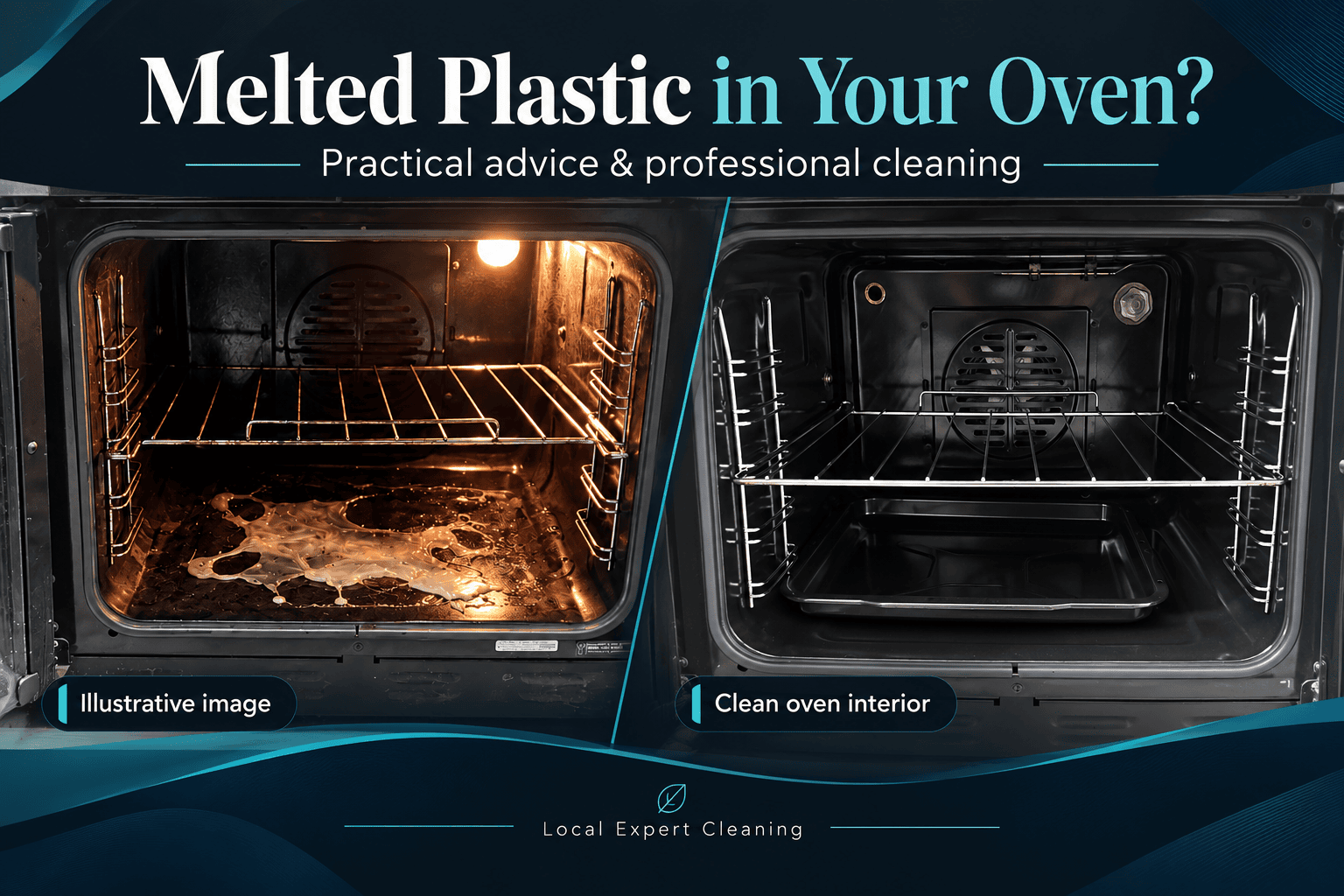
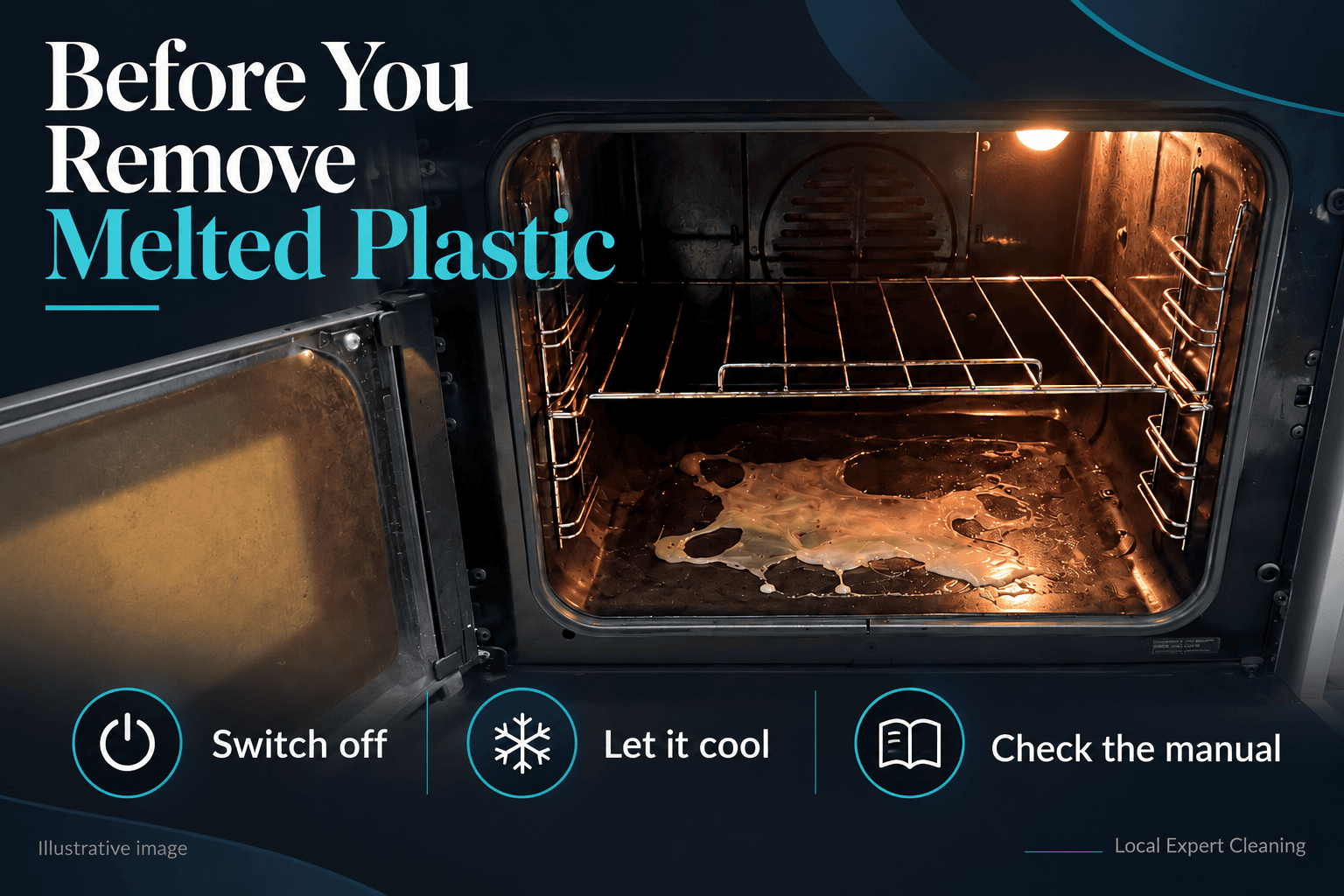
If plastic has melted inside your oven, switch it off and let it cool before attempting removal. The right cleaning method depends on where the plastic has landed and what your appliance manufacturer allows.
This guide explains your cleaning options, the limitations of blades and scrapers, and when professional help is appropriate. We also share a recent job involving a forgotten plastic lid, supported by the customer’s Google review and photographs.
Ventilate the kitchen if there is a smell, allow the oven to cool completely and check the manufacturer’s instructions. Keep the appliance out of use while you assess the problem. Do not use high heat or a self-cleaning cycle as a general way to burn plastic away.
The customer’s story
A Plastic Lid Melted Inside the Oven During Kitchen Work
Our customer called Local Expert Cleaning after noticing a plastic smell coming from their oven. While work was being carried out in the kitchen, a plastic lid had been placed inside the appliance. It was still there when the oven was accidentally switched on.
The lid melted, leaving the customer with an oven that needed attention. They contacted us for help with the plastic and a professional oven clean.
We attended and cleaned the oven, which also had an existing build-up of grease. The customer was very happy with the result and later described their experience in a five-star Google review under the name Zayday.
Their review specifically mentions the grease build-up and melted plastic. They also uploaded three photographs showing the cooker and oven interiors.
Read Zayday’s review and see their photographsLook inside the oven before switching it on, particularly during kitchen renovations or reorganising. Keep plastic lids, containers and other items unsuitable for oven use outside the appliance.
Before using the oven again
Can You Use an Oven With Melted Plastic Still Inside?
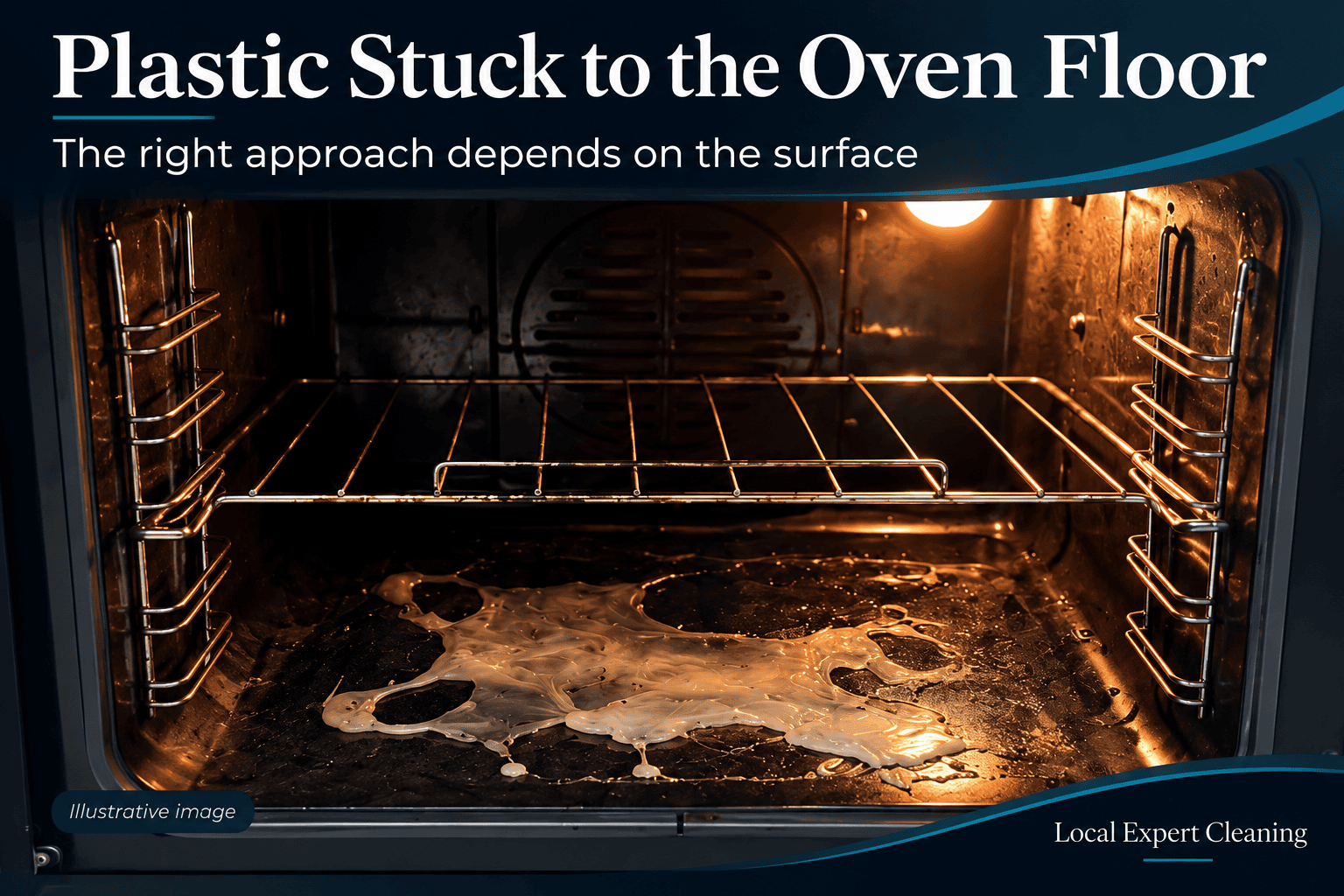
Keep the oven out of use until the remaining plastic and any possible damage have been assessed. Taking out the melted lid or container may leave attached residue, including deposits beneath the rack or around less accessible parts.
Residue may produce more smells or smoke
Plastic left on an interior surface can soften or burn when reheated. Do not cook another meal to see whether the smell disappears. Establish what remains and follow the appliance manufacturer’s advice before returning the oven to use.
Plastic can reach hidden areas
Melted material may drip through a rack or enter gaps. If it has reached a fan opening, heating element or internal component, contact the manufacturer or an appropriately qualified appliance engineer rather than dismantling the oven yourself.
Some deposits need more than cleaning
Plastic can bond to an oven liner. Removing the deposit may reveal damage that cleaning cannot repair, while forceful scraping can harm the finish. An assessment helps establish whether cleaning, servicing or a replacement part is appropriate.
Do not use a self-cleaning cycle or high heat as a general plastic-removal method. Instructions for an exposed electric element can differ from those for an oven liner. Follow guidance for your exact model and affected component.
Manufacturer reference: GE Appliances’ guidance on melted plastic distinguishes between electric elements and interior oven liners, recommending service for plastic melted onto the interior liner. Your own appliance manufacturer’s instructions should guide any action.
The result and customer feedback
The Finished Oven and Our Customer’s Google Review
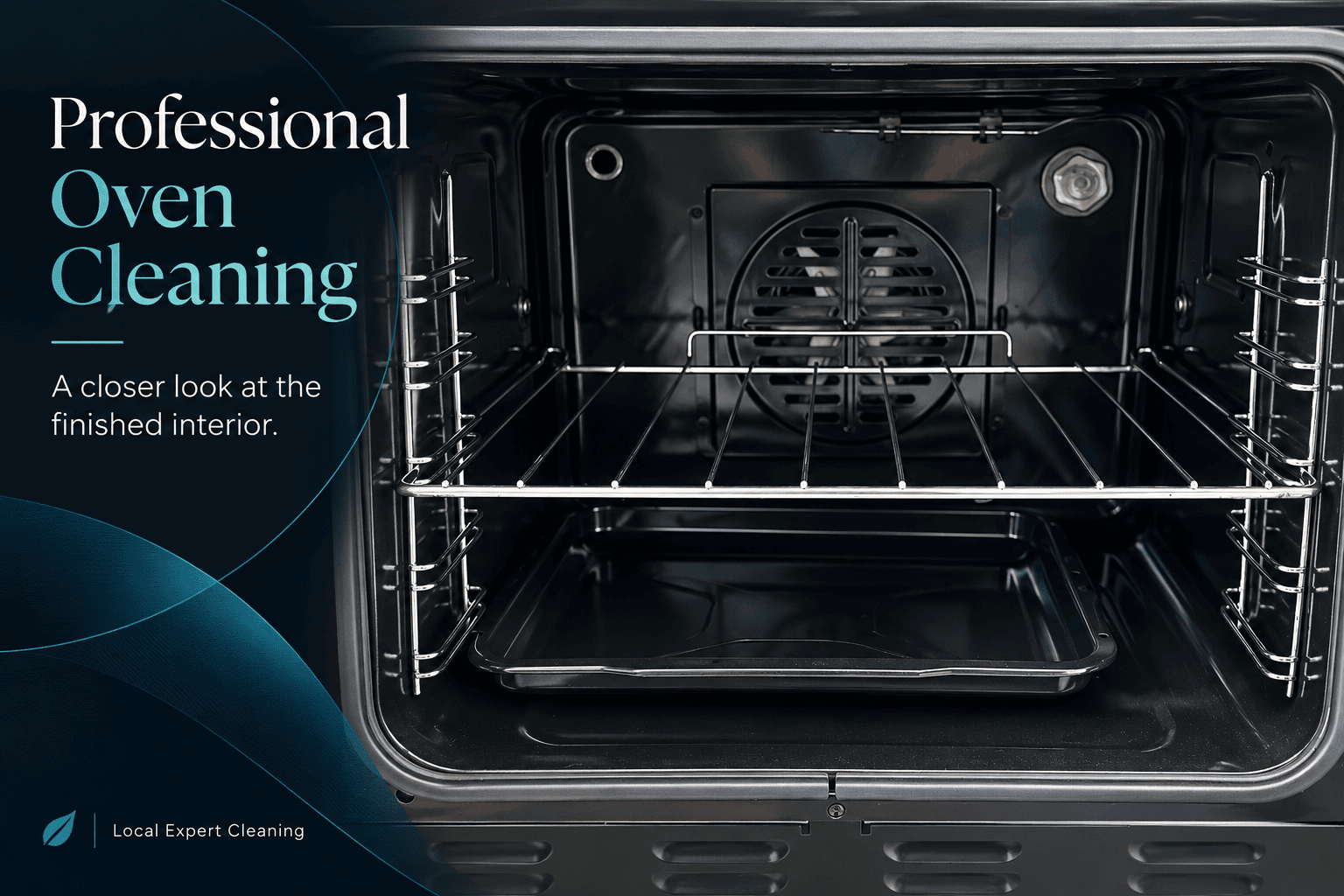
Following the clean, our customer shared a five-star Google review and photographs of their cooker and oven interiors. Their feedback describes the difference after grease build-up and the accidental melting of plastic.
Feedback from Zayday
“Absolutely amazing Job. Amazing customer service.”
Zayday mentioned both the service and the cleaning result, uploading three photographs alongside their review. The visible review excerpt is also reproduced as text so it is easy to read on any screen.
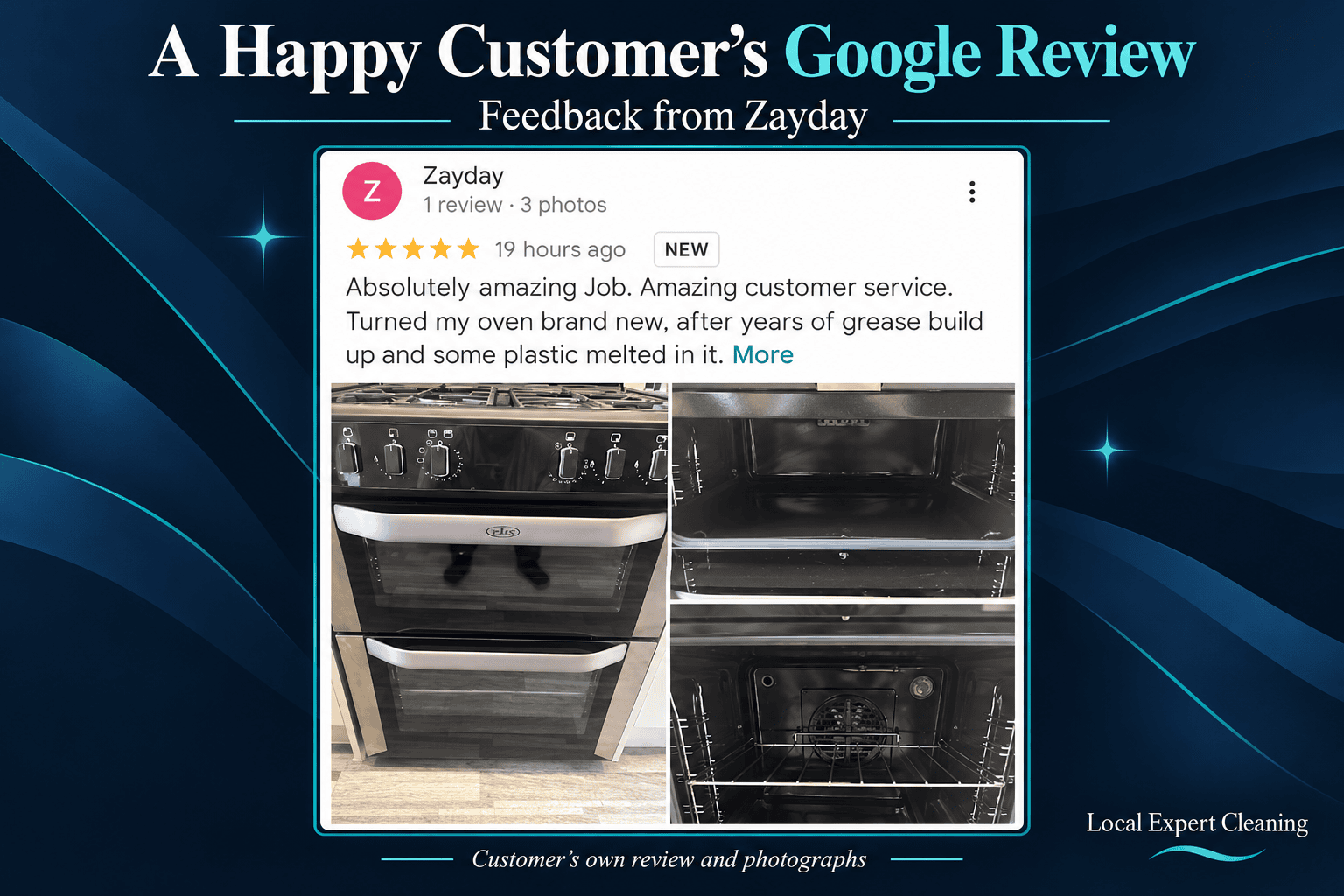
“Absolutely amazing Job. Amazing customer service. Turned my oven brand new, after years of grease build up and some plastic melted in it.”
Zayday · Google review
Excerpt visible in the customer’s review screenshot.
This feedback describes one customer’s experience. Results depend on the oven’s condition, the affected surfaces and whether the plastic has caused damage.
Need Help With Melted Plastic in Your Oven?
Call Local Expert Cleaning to discuss what happened and where the plastic has landed. We can explain whether the affected areas are suitable for our cleaning service and check availability in your area. Suspected component damage needs advice from the manufacturer or an appliance engineer.
Explore our professional oven-cleaning service across the West Midlands for more information about the appliances we clean and what the service includes.