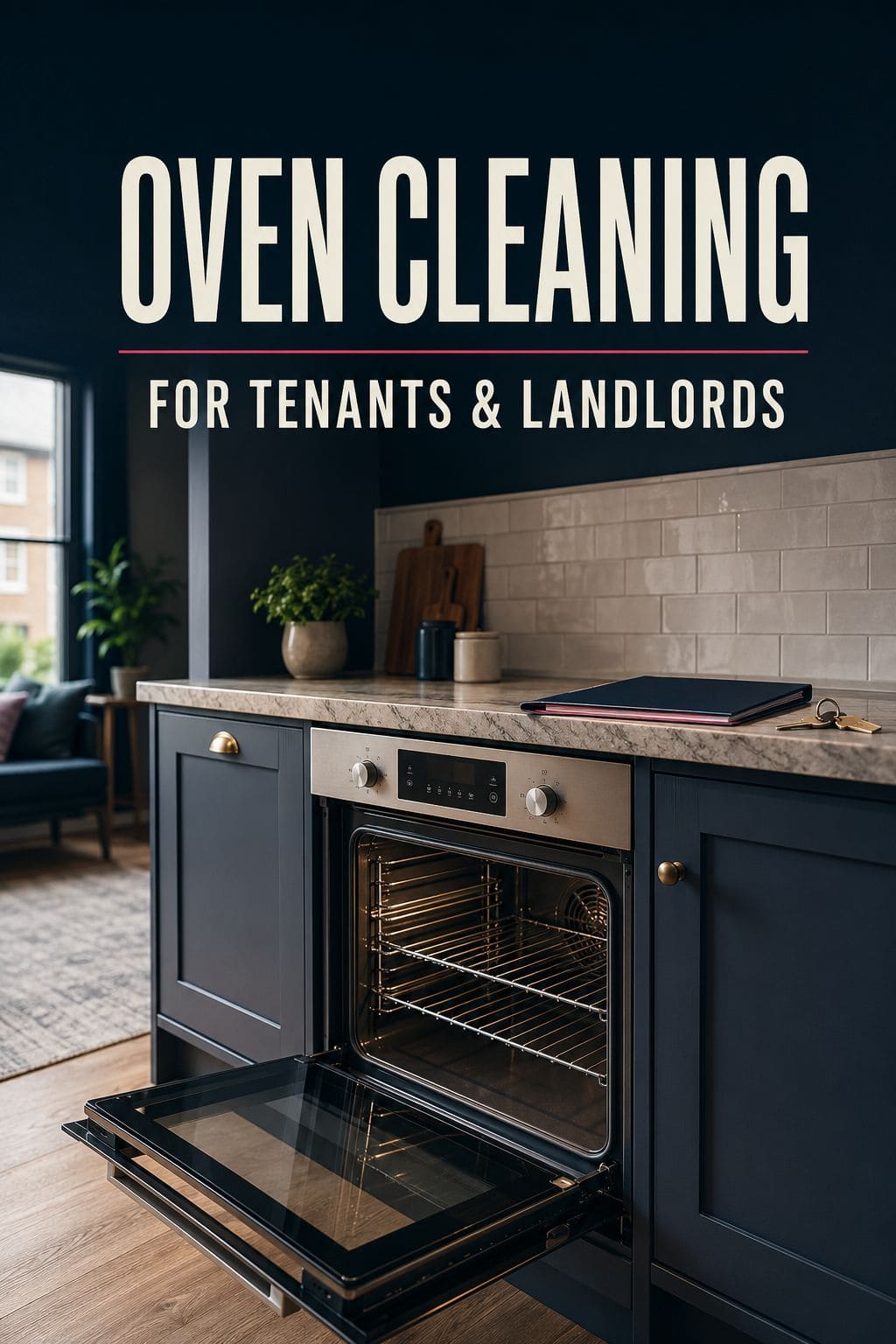
Clean oven in a UK rental property ready for tenants and landlords

A practical rental-property guide

Before checkout or a new tenancy

Oven Cleaning for Tenants and Landlords

The important question is not simply whether an oven has been professionally cleaned. Its condition should be considered alongside the tenancy agreement, the original inventory and any photographs recorded when the tenancy began.

Quick answer: tenants should compare the oven with its recorded check-in condition, while landlords should use clear evidence when assessing the appliance or preparing it for the next occupant.

Start with the records

Who Should Arrange the Oven Cleaning?

There is no single answer for every rental property. The sensible starting point is the tenancy agreement, followed by the check-in inventory, dated photographs and the oven’s actual condition.

For tenants

Compare the oven with the check-in condition

Look at how the oven was recorded when the tenancy began. If grease, burnt food or cooking residue has built up during the tenancy, decide whether it can be cleaned safely by hand or whether a deeper clean would be more practical.
For landlords

Use evidence rather than assumptions

Compare the check-out condition with the original inventory and allow for existing marks, wear or permanent staining. If the oven needs attention before another occupant moves in, confirm exactly what cleaning work is required.

For agents

Keep instructions and expectations clear

Check-out notes should distinguish removable cooking residue from damage, worn enamel, failed seals or appliance faults. Cleaning cannot repair mechanical problems or permanent surface wear.

Preparing more than the appliance? If the kitchen, bathrooms, floors and other rooms also need attention, view our complete end-of-tenancy cleaning service in Birmingham .
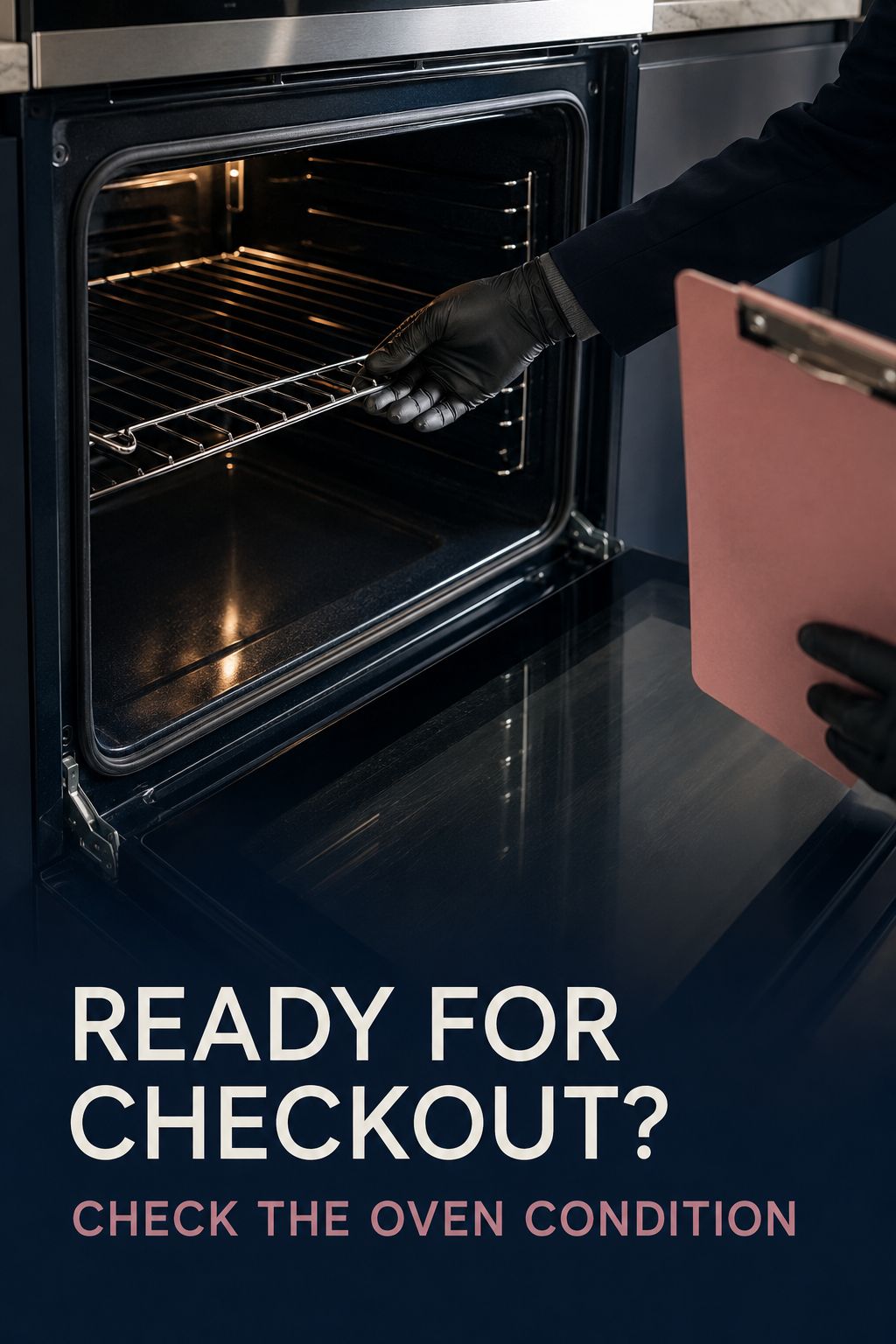
Clean oven being checked during a rental property checkout inspection

The visible condition

What May Be Checked During a Rental-Property Handover?

A check-out inspection may consider several accessible parts of the oven. The aim should be to record the condition accurately rather than expect cleaning to remove age, damage or permanent wear.

  • Oven cavity Visible grease, loose burnt food and cooking residue on accessible interior surfaces.
  • Racks, trays and side supports Removable items may be checked for carbon deposits, grease and food residue.
  • Door and accessible glass The inner door, edges and visible glass may be examined for greasy marks and cooked-on splashes.
  • Grill and upper area Accessible surfaces around the grill and oven roof may be included where the appliance design allows them to be viewed safely.
  • Condition rather than appearance alone Worn enamel, scratches, corrosion, staining and damaged seals should not be confused with removable dirt.

Cleaning can improve accessible surfaces, racks and glass, but it cannot restore damaged components or make an older appliance identical to a new oven.

Create a clear record

Photographs, Inventories and the Right Time to Clean

Clear photographs can help tenants, landlords and agents understand the oven’s condition at a particular point in time. They are most useful when they support an accurate written inventory.

  1. Review the original record

    Check the inventory description and any photographs taken when the tenancy began before deciding what needs cleaning.

  2. Use comparable photographs

    Photograph the oven cavity, door glass, racks and trays from clear angles. Where possible, use similar positions to the check-in photographs.

  3. Keep the original files

    Retain the dated images, relevant messages and any cleaning invoice rather than relying only on compressed screenshots.

  4. Leave time for a final check

    Arrange cleaning before the final inspection where possible. This leaves time to check the oven after cleaning and identify anything that is permanent wear rather than residue.

Practical tip: photographs record condition, but they do not guarantee a particular inspection or deposit decision.

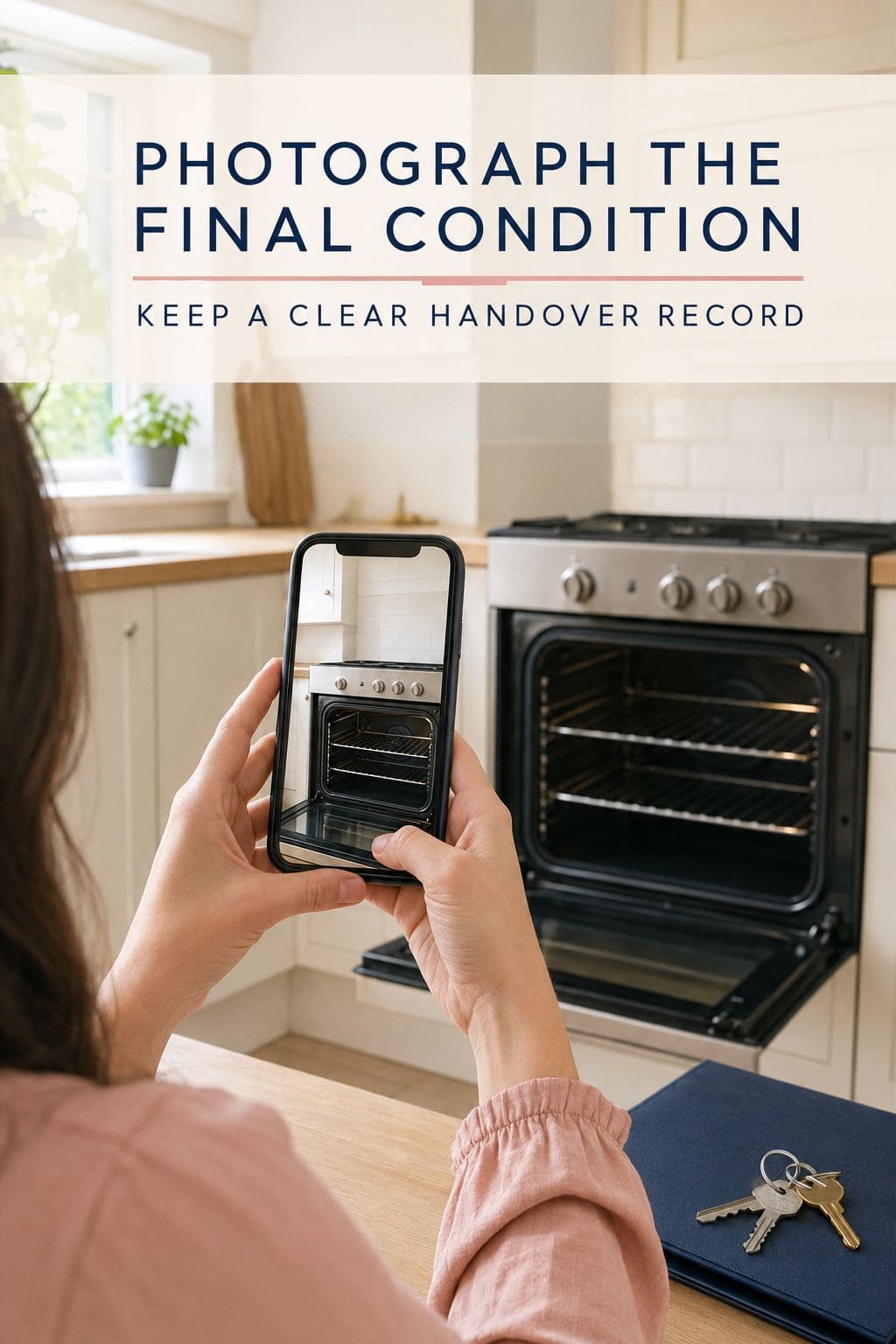
Tenant photographing a clean oven before the final property handover
Record the finished condition before handover

Deciding how to clean it

When Might a Professional Oven Deep Clean Be Useful?

Professional cleaning is a practical choice rather than an automatic requirement. It may be useful when the oven’s condition, design or available time makes safe hand-cleaning difficult.

Heavy baked-on residue

Grease and carbon have built up across the cavity, racks, trays or grill and are not responding to normal cleaning.

Marks behind accessible glass

Greasy deposits are trapped between suitable removable door-glass panels and cannot be reached by wiping the visible surface.

Limited time before handover

The moving or property-turnaround schedule leaves insufficient time to clean, inspect and reassemble the appliance properly.

Awkward removable parts

Racks, trays, internal panels or suitable door components require more detailed access and separate cleaning.

Local Expert Cleaning removes suitable racks, trays, the back plate, fan blade and accessible door-glass panels for separate cleaning. Suitable metal parts are cleaned in our heated dip tank, while non-toxic products are used inside the property.

You can read about specialist help for a heavily soiled oven or check our current oven-cleaning prices before arranging an appointment.

Tell us your oven type and postcode We will confirm coverage, availability and the price.

Clear answers before handover

Oven Cleaning Questions From Tenants and Landlords

Practical answers based on the oven’s condition and available records.

01

Does a tenant always need to book professional oven cleaning?

No. Professional cleaning is not automatically necessary for every tenancy. Check the agreement, the original inventory and the oven’s current condition. A professional service may be useful when heavy residue cannot be removed safely through normal cleaning.

02

What condition should the oven be left in?

The most useful comparison is the recorded condition at check-in. Visible food, grease and cooking residue should be addressed, while existing marks, normal wear, corrosion or permanent staining should be recorded separately.

03

Can a landlord arrange oven cleaning between tenancies?

Yes. A landlord or managing agent can arrange cleaning when preparing the property for another occupant. The appliance should be accessible, and the required work, access arrangements and price should be agreed before the appointment.

04

Are photographs useful after the oven has been cleaned?

Yes. Clear dated photographs can help record the finished condition. Photograph the cavity, door glass, racks and trays, and retain the original image files with the relevant inventory or cleaning invoice.

05

Can professional oven cleaning guarantee a deposit return?

No cleaning company can guarantee a deposit decision. The oven is only one part of the property, and decisions may also involve the tenancy terms, evidence, damage, rent, missing items and the condition of other rooms.

06

When should the oven cleaning be arranged?

Where possible, arrange it several days before checkout or before the next tenant arrives. This gives enough time to inspect the finished oven, take photographs and deal with any marks that are permanent rather than removable residue.

Remember: the inventory, photographs and confirmed tenancy terms provide more useful context than assuming every rental oven must look completely new at checkout.

Scroll to Top