Practical oven-care advice

How to Keep Your Oven Clean Between Professional Cleans

A few careful habits can stop fresh spills and grease from becoming difficult burnt-on build-up. This guide explains how to maintain the accessible parts of your oven safely, what to avoid and when light cleaning may no longer be enough.
  • Let the oven cool completely
  • Wipe fresh spills promptly
  • Avoid excessive water
  • Follow the appliance manual
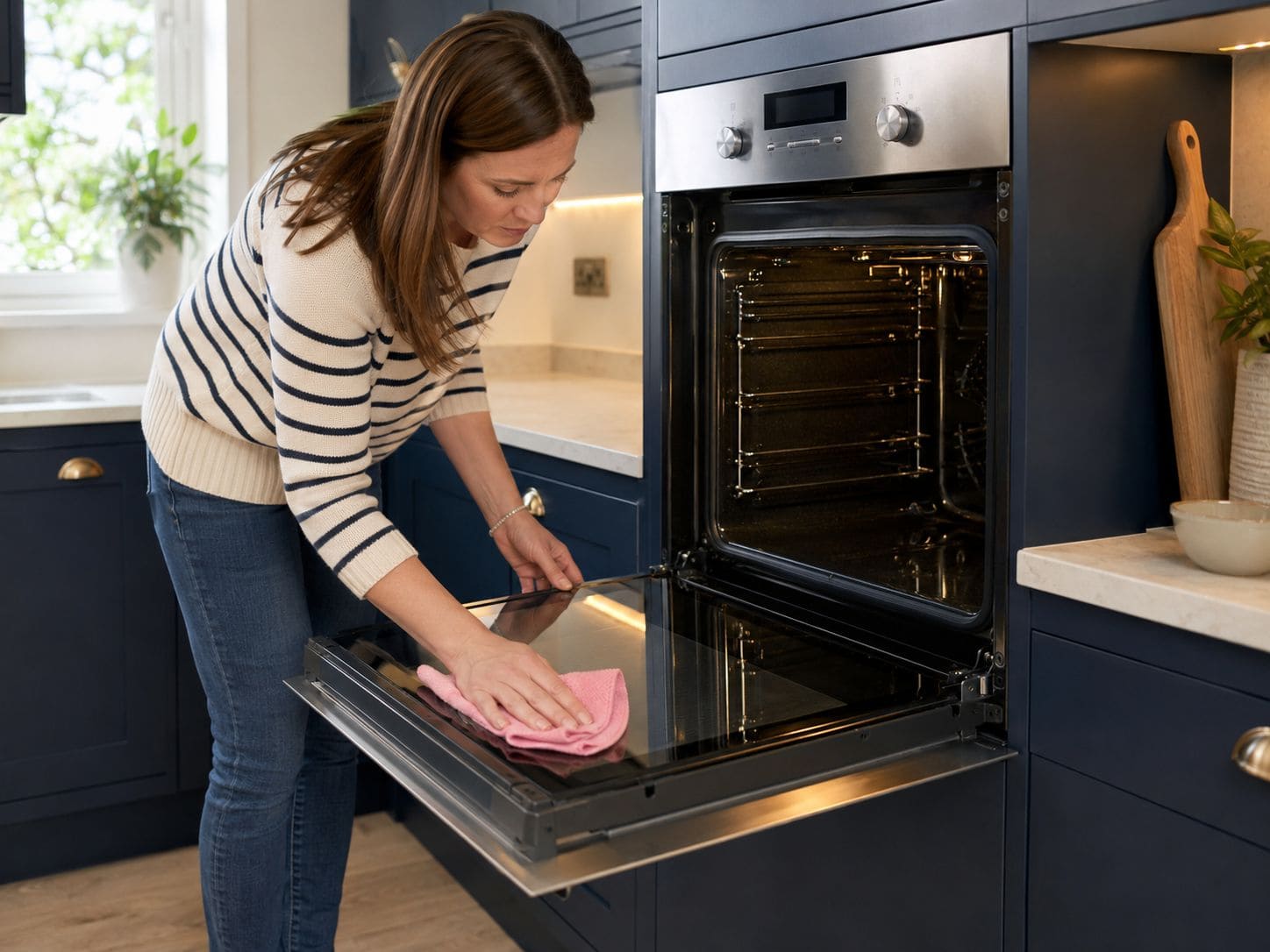
Homeowner wiping a cooled oven to keep it clean between professional cleans
Light maintenance is safest once the appliance has completely cooled.

Safe everyday maintenance

Simple Habits That Reduce Oven Build-Up

Light, regular maintenance is easier than trying to remove months of baked-on grease at once. Always let the appliance cool completely and follow the manufacturer’s care instructions for your oven model.

Wipe Fresh Spills

Once the oven is completely cool, wipe accessible fresh spills before they are heated repeatedly and become more difficult to remove.

Use a Soft Cloth

A damp microfibre cloth with a small amount of mild washing-up liquid is usually enough for light grease on suitable accessible surfaces.

Clean Trays Separately

Remove loose trays only when they are cool and safe to handle. Clean and dry them separately before returning them to the oven.

Wipe Accessible Glass

Clean the accessible side of the door glass and surrounding frame gently. Do not dismantle glass panels unless you know the correct procedure for that model.

Avoid Excess Water

Apply moisture to the cloth rather than pouring or heavily spraying liquid inside the appliance, especially near controls, vents and electrical components.

Check the Appliance Manual

Follow the manufacturer’s instructions before using an oven liner, self-cleaning programme or built-in steam-cleaning function.

Remember: these habits are intended for light, accessible maintenance. They are not instructions for dismantling oven doors, removing electrical components or repairing appliance faults.

Know when to stop

When Light Oven Cleaning Is No Longer Enough

Regular wiping can control everyday marks, but heavy grease and burnt-on carbon need a more careful approach. Avoid these common mistakes and recognise when the job has moved beyond routine maintenance.
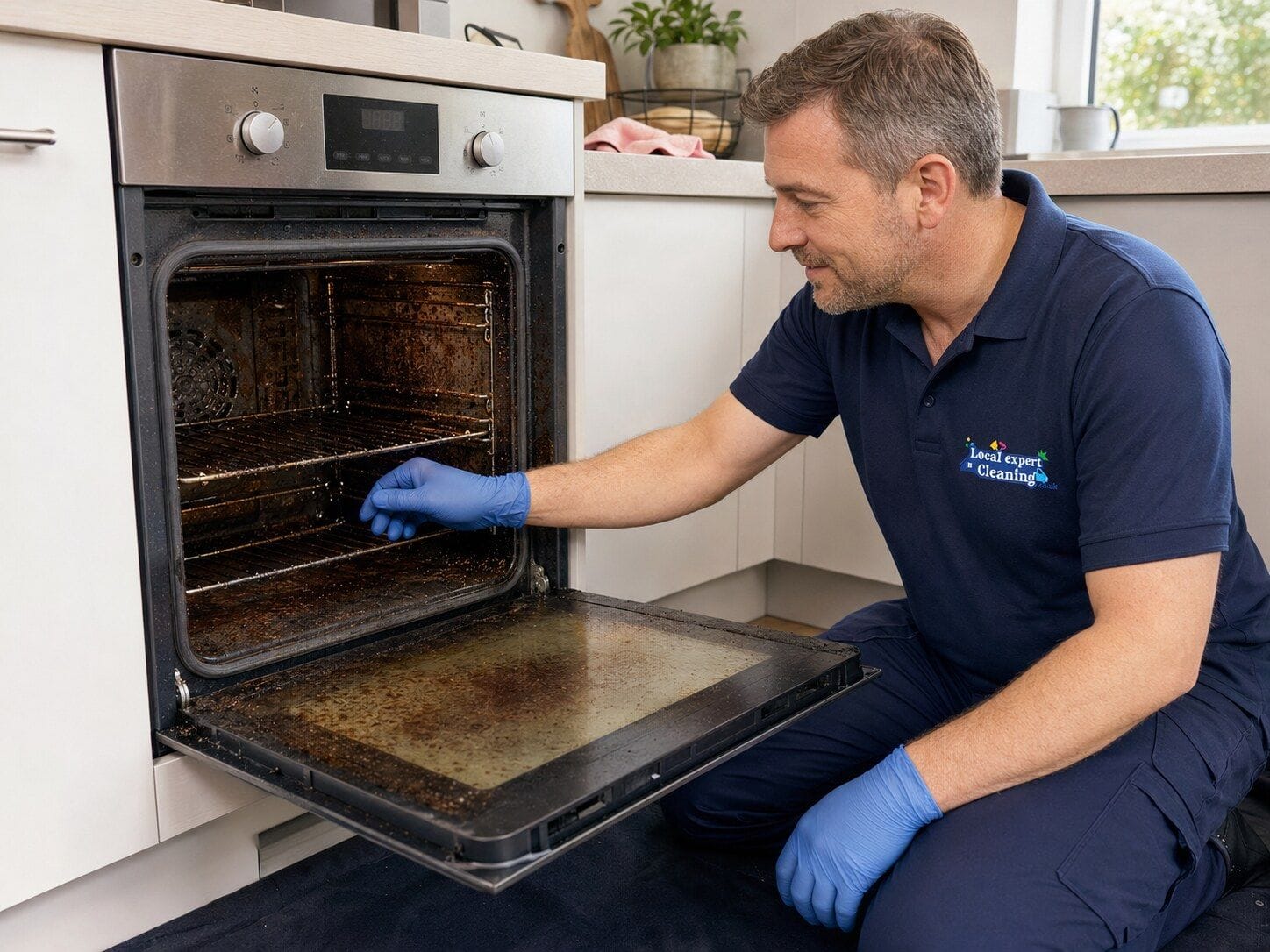
Local Expert Cleaning technician inspecting heavy grease inside an oven
Thick grease and burnt-on carbon usually require more than a quick surface wipe.

Avoid excessive liquid

Do not pour water or heavily spray products inside the appliance. Liquid can reach vents, heating elements and electrical components.

Be careful with blades and abrasives

Scrapers, wire pads and abrasive products may scratch glass, enamel or protective finishes when used on unsuitable surfaces.

Do not dismantle unfamiliar parts

Avoid removing doors, panels, fans or electrical parts unless the appliance instructions clearly permit it and you know how to refit them correctly.

Recognise stubborn build-up

Thick carbon, grease behind an accessible fan cover or staining between door-glass panels can mean that routine wiping is no longer sufficient.

Professional oven cleaning

When Should You Book a Professional Oven Clean?

Everyday wiping can help control fresh spills, but it cannot always reach heavy grease, burnt-on carbon or suitable removable components. When normal maintenance is no longer enough, a professional deep clean may be the more practical option.

Signs a deeper clean may be needed

  • Burnt-on food and carbon remain after gentle surface cleaning.
  • Grease has collected around racks, trays, door edges or the accessible fan area.
  • Smoke or persistent cooking odours appear because residue is heating inside the oven.
  • The door glass is heavily marked or difficult to clean safely.
  • You would prefer suitable removable parts to be cleaned separately using professional equipment.
A clear working method

What happens during a professional clean?

We inspect the appliance, protect the immediate working area and remove suitable accessible components. Removable metal parts are cleaned in our heated dip tank, while the oven interior, door and accessible glass are cleaned carefully before reassembly and a final visual check.

See our seven-step oven-cleaning process

Oven-Care Questions

Quick answers about maintaining your oven between appointments.

How often should I wipe my oven?

Wipe accessible surfaces after spills once the oven is switched off and completely cool. Regular light maintenance helps prevent fresh residue from becoming harder to remove.

Can I clean between the door-glass panels?

This depends on the appliance design. Do not dismantle the door unless the manufacturer’s instructions clearly explain that it is suitable and how it should be reassembled.

Does professional cleaning repair oven faults?

No. Oven cleaning removes accessible grease and residue, but it does not repair gas, electrical or mechanical problems. Suspected faults should be checked by a suitably qualified professional.

Always switch the oven off, allow it to cool completely and follow the appliance manufacturer’s cleaning instructions before carrying out routine maintenance.

Scroll to Top