Standard Wire or Chrome Racks
These removable racks can usually be soaked and cleaned separately. Avoid assuming that every shiny metal rack is stainless steel, as some have a plated finish that can become marked by aggressive scrubbing.
Practical oven-care guide
The safest starting point is to identify the rack finish, remove the cooled racks and soak them in warm water with washing-up liquid. Use a tool suitable for the surface, rinse away all residue and dry the racks thoroughly before refitting them.

Oven racks, shelves and runners can have different finishes. Identifying the type first helps you choose a cleaning method that will not unnecessarily scratch, discolour or damage the surface.
These removable racks can usually be soaked and cleaned separately. Avoid assuming that every shiny metal rack is stainless steel, as some have a plated finish that can become marked by aggressive scrubbing.
Stainless steel is durable, but unsuitable scourers can still leave visible scratches. Begin with warm soapy water and a non-scratch sponge or nylon brush before considering anything stronger.
Coated racks require gentler cleaning. Avoid metal scrapers and harsh abrasives that may damage the coating and expose the metal underneath.
Telescopic rails may contain bearings, lubricant and moving parts. They should not automatically be soaked, placed in a dishwasher or included in a self-cleaning cycle.
Your appliance manual takes priority. Check the instructions for your oven model before soaking coated racks, cleaning telescopic runners or leaving any accessories inside a self-cleaning cycle.

For most standard removable racks, soaking softens grease and food residue so less force is required. Check the appliance instructions before applying this method to coated racks or telescopic runners.
Thick grease and burnt-on residue rarely disappear with one quick wipe. Work in controlled stages instead of using excessive force, unsuitable chemicals or tools that may damage the rack finish.
Refresh the warm water and washing-up liquid, then allow more time for stubborn deposits to soften before brushing again.
Concentrate on one section at a time with a suitable nylon brush or non-scratch pad rather than aggressively scrubbing the complete rack.
If you use a dedicated rack-cleaning product, confirm that it is suitable for the rack finish and follow its contact-time, ventilation and rinsing instructions.
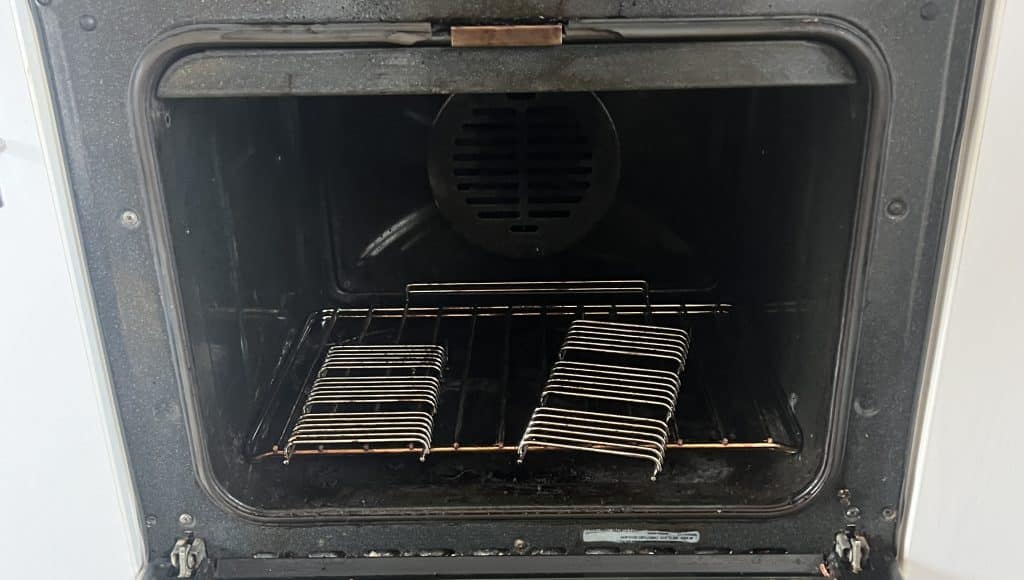
The correct method depends on whether you are dealing with ordinary grease, light surface rust, a protective coating or permanent corrosion.
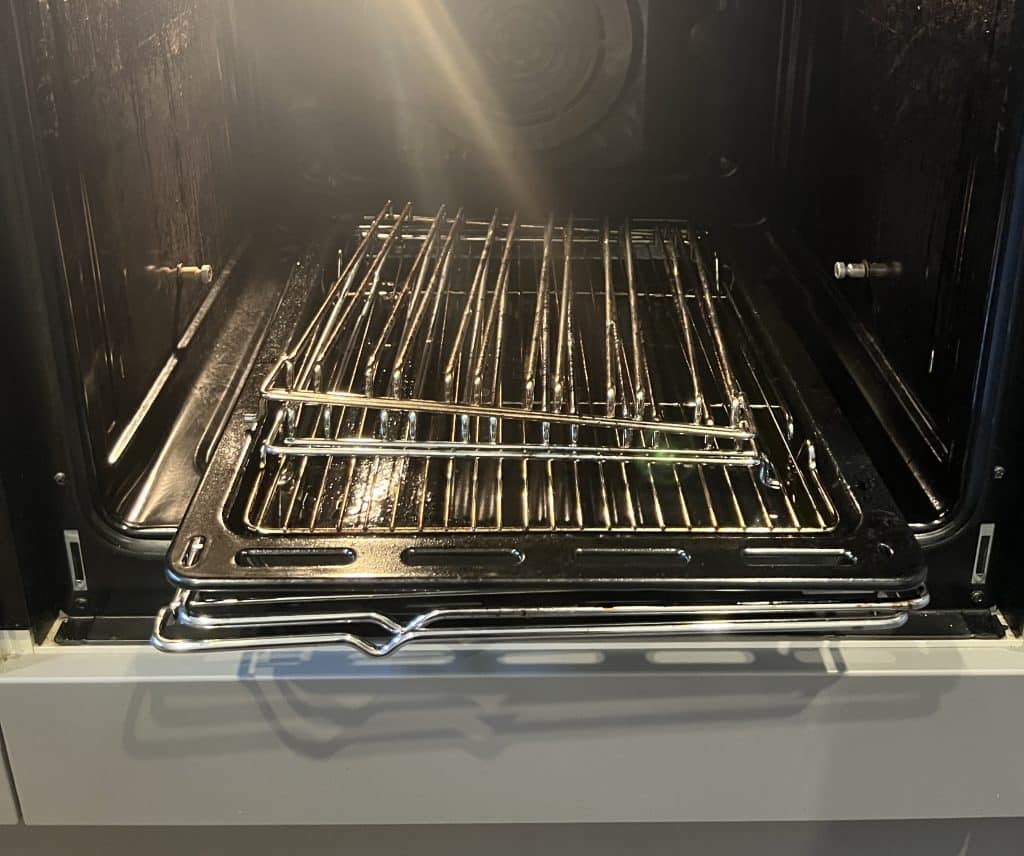
Start with soaking and a non-scratch sponge or nylon brush. Avoid assuming that a highly abrasive tool is necessary simply because the rack is made from metal.
Small surface marks may sometimes be reduced with a method approved for the rack material. Rinse and dry the rack fully afterwards to prevent moisture remaining on the surface.
Cleaning cannot restore metal that is deeply pitted, flaking or structurally weakened. A badly corroded or damaged rack may need to be replaced with the correct part for the oven model.
Avoid prolonged soaking unless the manufacturer permits it. Water, chemicals and heat may affect bearings, lubricant or the rack’s protective finish.
Professional cleaning may be worthwhile when grease and carbon remain firmly bonded after normal soaking, or when cleaning every wire, corner and removable part has become too time-consuming.
Clear answers to common questions about racks, shelves, baking soda, dishwashers, self-cleaning cycles and rust.
For suitable standard racks, remove them from a completely cooled oven and soak them in warm water with washing-up liquid. Once the grease has softened, use a non-scratch sponge or nylon brush before rinsing and drying the racks thoroughly.
Baking soda may help with some standard metal racks, but its mild abrasive action may not suit every finish. Check the rack instructions and test a small area. Mixing it with vinegar creates fizz, but much of the cleaning action comes from soaking and physical removal of the softened grease.
Only when the oven manufacturer confirms that the rack is dishwasher-safe and it fits without damaging the dishwasher. Coated racks and telescopic runners may be unsuitable.
Do not leave racks inside automatically. High-temperature cleaning may discolour some racks, affect coatings or damage telescopic runners. Follow the instructions for your exact oven model.
Light surface rust may sometimes be reduced using a method approved for the rack material, followed by thorough rinsing and drying. Replace racks that are deeply pitted, flaking or structurally weakened.
Clean fresh spills once the oven has cooled and arrange a deeper clean when grease or burnt residue begins building up. The suitable frequency depends on how often the oven is used and what is cooked.
We use cookies and similar technologies, along with information about your activity and searches on our platform, to operate our website, improve your experience, show personalised ads, and analyse how our site is used.