Fixed Grill Element
If the manual does not show a lowering function, leave the element where it is. Clean the accessible oven roof around it without undoing screws, pulling the element or placing pressure on its electrical connections.
Practical oven-cleaning guidance
Grease and burnt food can collect on the oven ceiling above the upper grill element, causing smoke and unpleasant cooking odours. The safest cleaning method depends on the oven design, element and internal surface.
Switch the oven off, allow it to cool completely and check the manufacturer’s instructions. Clean the oven roof around the element without spraying or coating the element itself. Only lower an element when the appliance manual confirms it is designed to move.
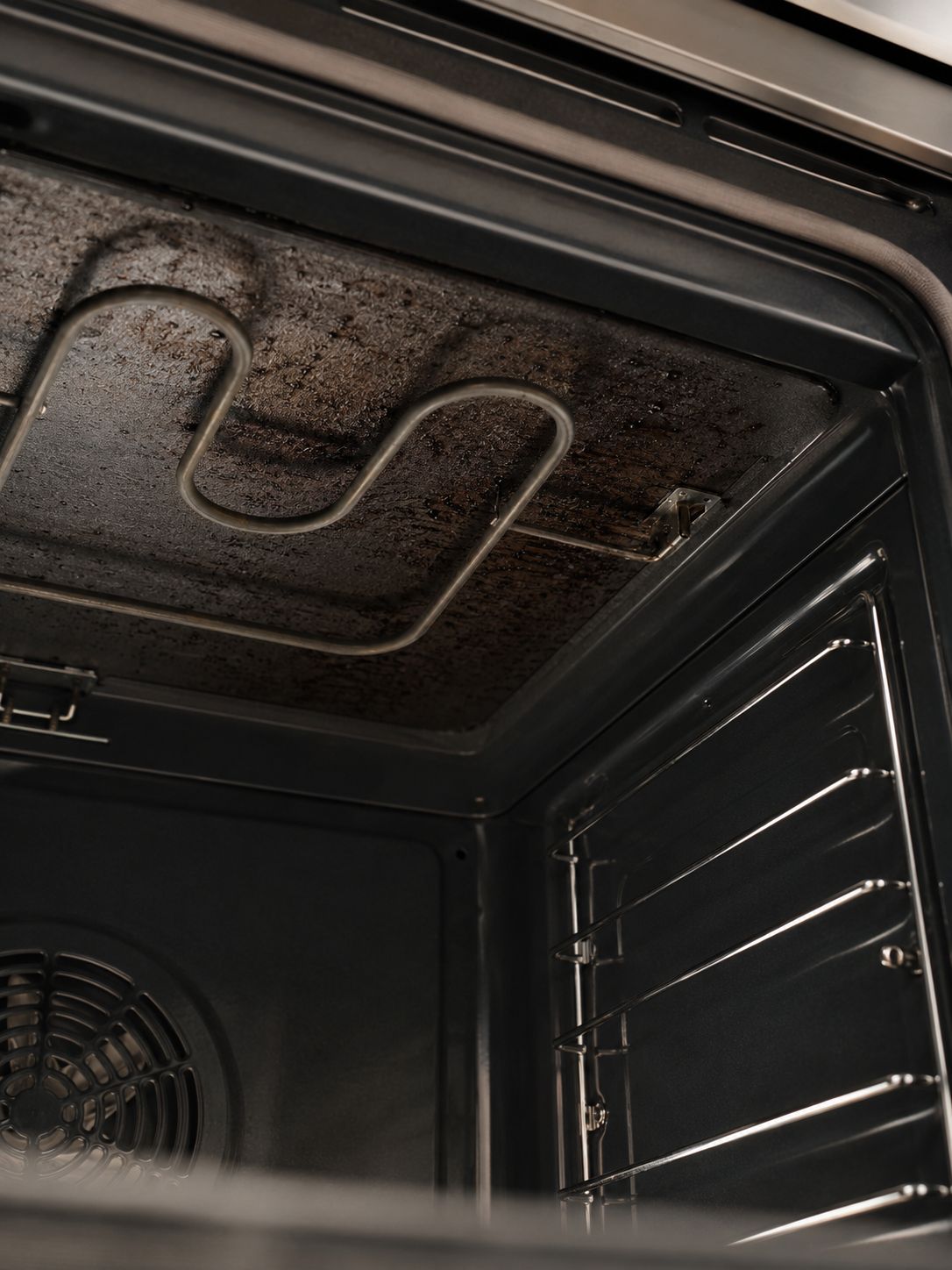
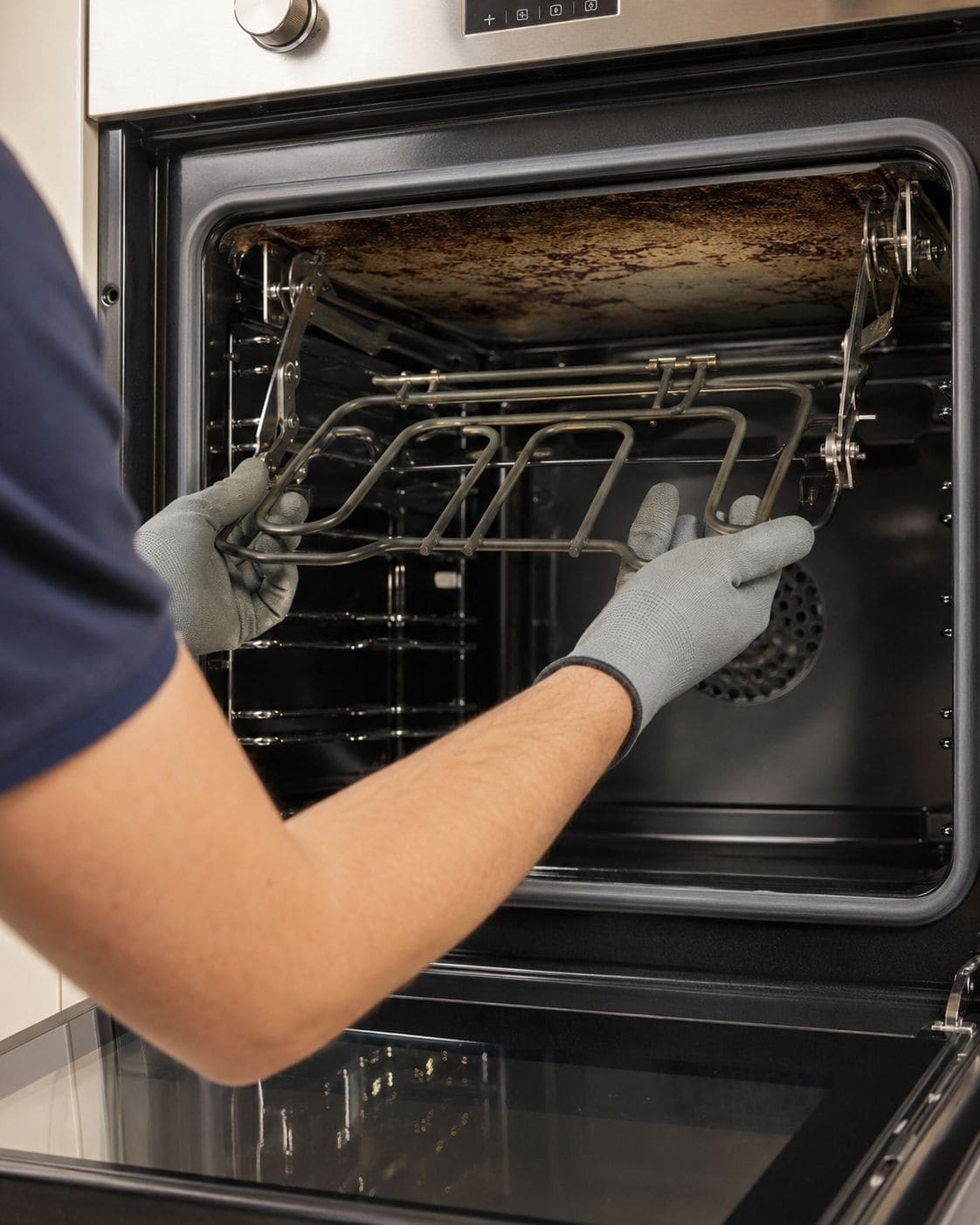
Before you begin
Oven designs are not all the same. Before cleaning the roof, identify how the upper element is fitted and check the appliance manual. Some elements are designed to lower for cleaning, while others are fixed and should remain in place.
If the manual does not show a lowering function, leave the element where it is. Clean the accessible oven roof around it without undoing screws, pulling the element or placing pressure on its electrical connections.
Some ovens have an upper element specifically designed to hinge or lower. Only move it when the manufacturer’s instructions confirm the correct method. Never force an element that does not move easily as described in the manual.
Smooth enamel, catalytic liners and self-cleaning surfaces require different methods. Avoid scraping or applying unsuitable products until you know which surface your oven has and what its manufacturer recommends.
Some screws hold electrical components in position and are intended for servicing rather than routine cleaning. If the manual is unclear, leave the element fitted.
Safe step-by-step method
Once you have checked the appliance manual and identified the oven-roof surface, use this controlled method to remove accessible grease without coating, scraping or forcing the heating element.
Turn the oven off and wait until the interior and upper element are completely cold. If required by the appliance instructions, isolate the power supply before working close to the element.
Take out the oven racks and trays to create a clear working area. Use a dry, soft cloth or brush to remove loose crumbs without pressing against the upper heating element.
Follow the manufacturer’s instructions for the oven-roof material. For suitable smooth enamel, place a small amount of approved cleaner or mild washing-up solution onto a damp cloth or non-scratch sponge—not directly into the oven.
Wipe the accessible roof carefully, working around the element supports and surrounding enamel. Keep liquid and cleaning product away from the element, electrical connections, vents and openings.
Allow the suitable product the contact time stated on its label. Use a non-scratch pad or a manufacturer-approved plastic scraper on compatible enamel. Do not scrape catalytic liners or use excessive force near the element.
Use clean, damp cloths to remove the loosened grease and all cleaning residue. Finish with a dry cloth and allow the interior to dry fully before replacing the racks and restoring power.
Using too much product, cleaning a warm oven or scrubbing the wrong surface can cause unnecessary problems. See the common oven-cleaning mistakes to avoid before starting a deeper clean.

Understand the element design
Some upper grill elements are designed to lower for cleaning, but many are fixed electrical components. The correct approach depends on the oven model and must be confirmed in its instruction manual.
If the manufacturer provides a lowering function, the element normally remains attached and is moved only to its intended cleaning position. It should not be disconnected or pulled away from its electrical connections.
Lower it only when the appliance manual confirms that it is designed to move. Follow the stated release method, support the element gently and return it to its normal position afterwards.
Leave a fixed element in position. Clean the accessible enamel around it without bending the element, undoing its mounting screws or applying cleaning product directly to it.
Disconnecting wiring is not part of routine household cleaning. If an element must be electrically disconnected, repaired or replaced, contact a suitably qualified appliance engineer.
If the element does not move exactly as the manufacturer describes, stop and leave it fitted.
Protect the element and oven surface
The oven roof may contain smooth enamel, catalytic material or another specialist coating. A product that is suitable for one surface may be unsuitable for another, so always check the appliance manual and the cleaner’s label before use.
No cleaning product should be sprayed or applied directly to the upper heating element. Apply a suitable product to a cloth or sponge and clean only the compatible oven-roof surface around it.
Spray can settle on the element, electrical connections, vents and hidden openings. Keep the application controlled by placing the product onto the cleaning cloth instead.
Elbow Grease sells different cleaners with different instructions. Do not treat the original degreaser, oven kit and heavy-duty oven cleaner as the same product. Check the exact label and approved surfaces.
Abrasive pads, metal scrapers and strong chemicals can damage catalytic or specialist oven coatings. Follow the manufacturer’s cleaning instructions for these surfaces.
Never combine oven cleaners with bleach, ammonia or another cleaning product. Use one suitable method and follow its ventilation, protective-equipment and rinsing instructions.
Do not use the element as a handle or force it out of the way. Pressure can affect its supports, shape or electrical connections, even when no damage is immediately visible.
Residue may produce unpleasant smells or smoke when the oven heats. Wipe compatible surfaces repeatedly with clean, damp cloths and let the oven interior dry completely.
Keep the oven switched off and cold. Follow the manufacturer’s instructions and remove accessible residue gently with a clean, damp cloth where permitted. Allow the element and oven interior to dry fully before restoring power. If you are uncertain, do not use the oven until professional advice has been obtained.
Safe access matters when cleaning around a grill element Know when to stop
Light grease can often be removed carefully at home. However, it is safer to stop when the grill element prevents proper access or the oven roof has thick, burnt-on carbon that cannot be loosened without force.
A professional oven cleaner can remove grease and carbon where the appliance allows safe cleaning access.
A qualified appliance engineer should handle electrical disconnection, element repairs or replacement. An oven cleaner should not dismantle electrical parts unless separately qualified to do so.
Straightforward answers about cleaning above and beneath the upper grill element without damaging the oven.
No. Avoid spraying oven cleaner, degreaser or water directly onto the grill element. Apply a suitable product to a cloth instead, then carefully wipe the accessible oven-roof surface while the appliance is switched off and completely cold.
Only lower an element when the appliance manual confirms that it is designed to move for cleaning. Never force, bend or unscrew a fixed element. Electrical removal or disconnection should be handled by a qualified appliance engineer.
Allow the oven to cool, remove loose debris and use a slightly damp microfibre cloth with a product approved for the oven’s interior surface. Work around the element without pulling it, then remove all cleaning residue and let the area dry fully.
Grease, food splashes or cleaning-product residue on the oven roof can produce smoke and burnt smells. Stop using the appliance if the smoke is heavy, the element appears damaged or the smell seems electrical, and arrange an appropriate inspection.
Always follow the instructions for your specific oven model. Stop if the element is damaged, loose or unsafe to work around.
We use cookies and similar technologies, along with information about your activity and searches on our platform, to operate our website, improve your experience, show personalised ads, and analyse how our site is used.