01
Burnt Food and Grease
Old spills, cooking fat and food residue can smoke whenever the oven reaches a high temperature.
Advice Based on 15+ Years of Oven Cleaning
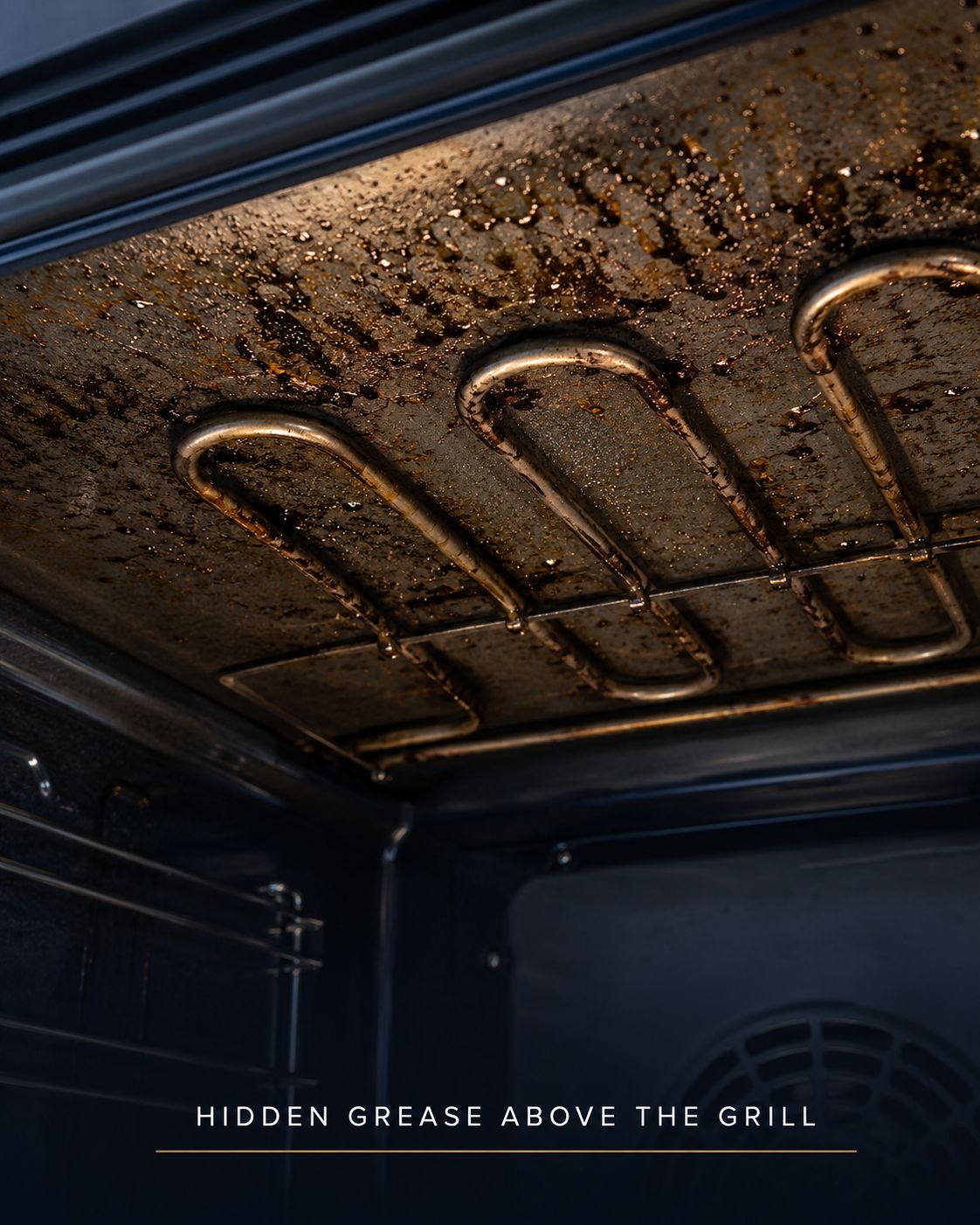
An oven may smoke because grease, food or cleaning residue is burning inside it. However, the cause can also be hidden above the upper grill element or behind the rear backplate around the fan and circular heating element.
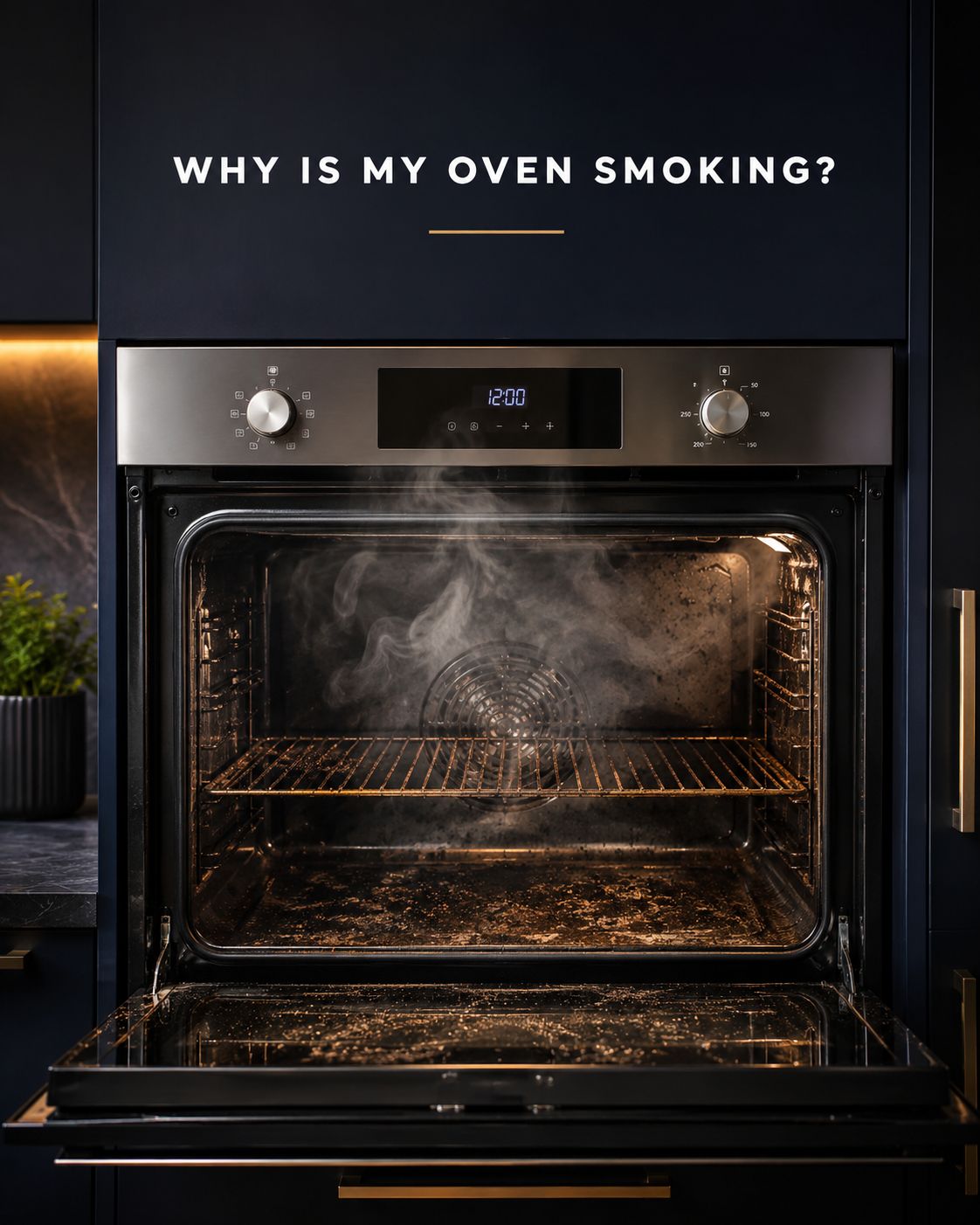
Smoke is commonly caused by grease, food residue or hidden build-up becoming hot inside the oven.
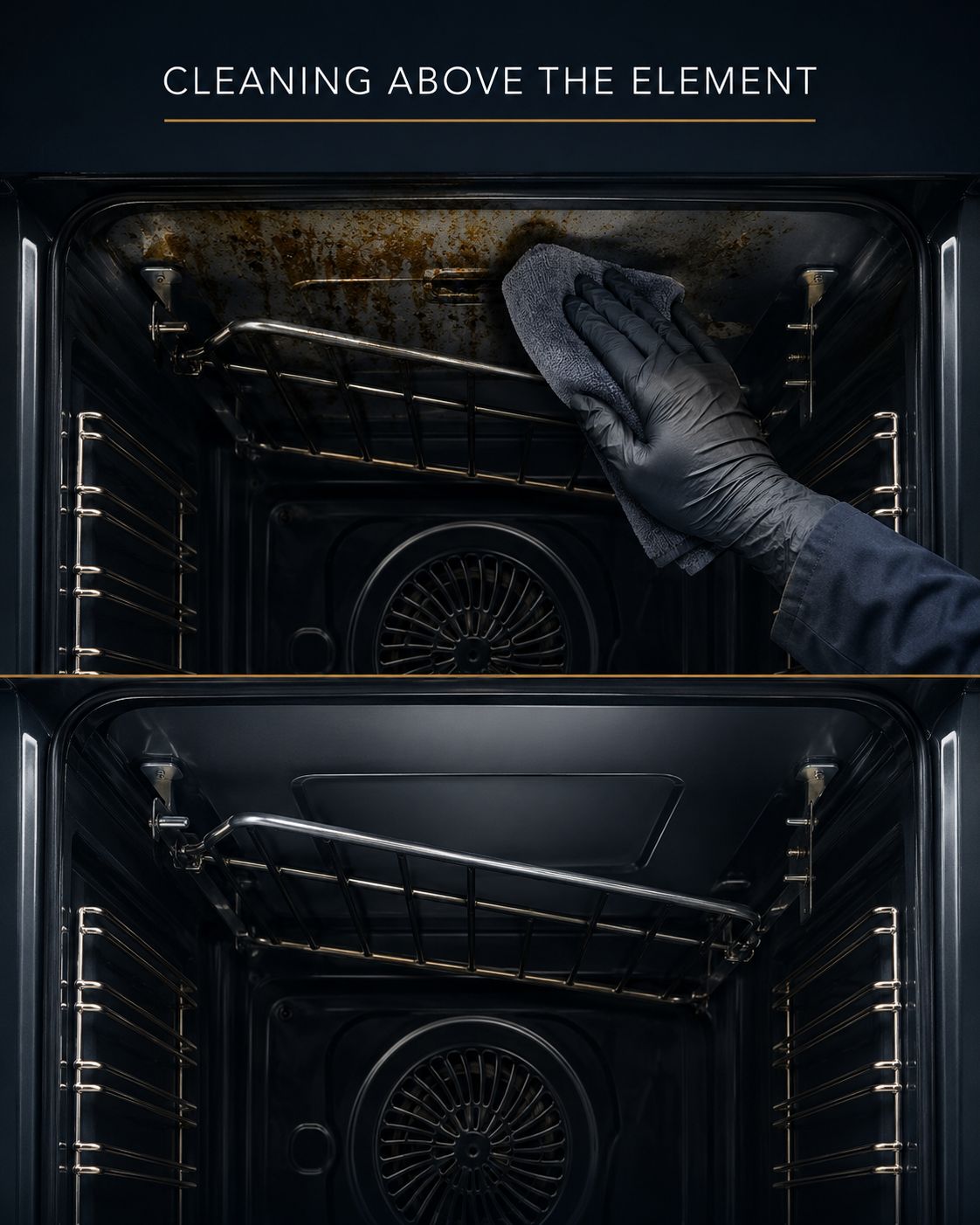
Removing the grease from the oven roof can stop smoke caused by hidden cooking deposits. However, the grill element must only be moved when it is designed to lower and the manufacturer’s instructions allow it.
Disconnect the power where possible and wait until the oven and element are completely cold.
Confirm from the appliance manual whether the grill element is hinged or designed to lower for cleaning.
Carefully remove the softened grease and burnt-on residue without soaking or damaging the heating element.
Remove all cleaning-product residue, dry the area and return the element to its correct position.
The visible part of the oven may look clean, but once a movable grill element is carefully lowered, there can be a thick layer of grease on the roof above it. Cleaning this overlooked area can make a major difference when an oven repeatedly smokes from the top.
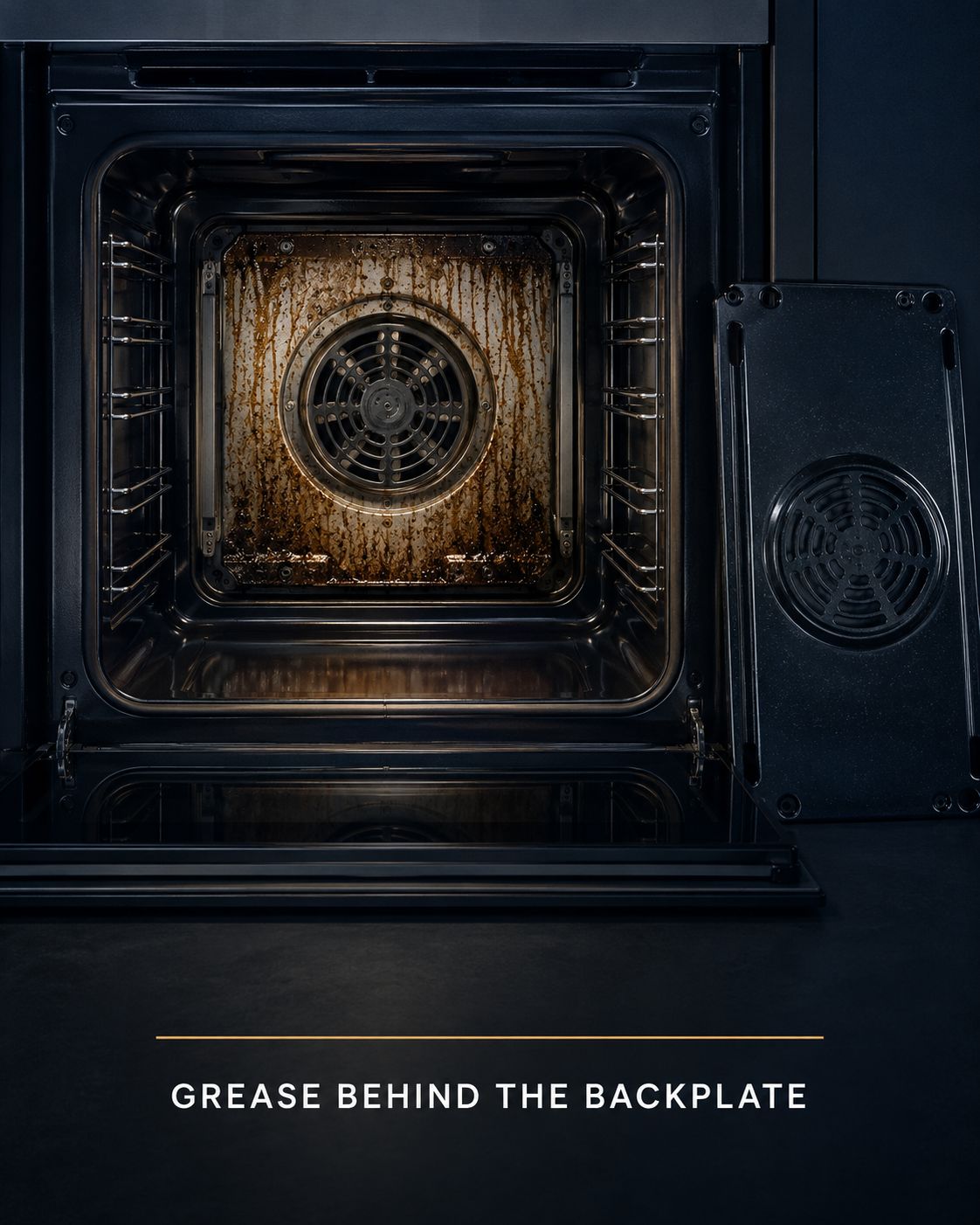
Grease can remain hidden behind the oven’s rear backplate.
The rear backplate is another area that people cannot normally see. Grease, food residue and cleaning products can pass through its vents and collect around the fan and circular heating element.
When the fan oven is switched on, the circular element behind the backplate becomes extremely hot. Grease or cleaning-product residue around this area can begin to heat, smell and smoke, even when the visible part of the oven looks clean.
When we remove the rear panel, we often find grease on the backplate, around the fan and close to the circular element. We also sometimes find cleaning product that has passed through the vents and was not properly removed.
Once the rear backplate is safely removed, the fan blade and the area surrounding the circular heating element can be inspected. This is where hidden grease, burnt food residue and traces of oven cleaner may be found.
Grease and residue are removed from both sides of the panel and from its ventilation openings.
Built-up grease is carefully cleaned from the fan blade without damaging or bending it.
Deposits hidden behind the panel are removed and the surface is thoroughly wiped and dried.
The area around the heating element is inspected for grease, residue and signs of damage.
The fan circulates hot air around the oven. If the fan blade, backplate or surrounding surfaces are greasy, heat and moving air can create smoke and spread the smell throughout the oven cavity. Removing these hidden deposits addresses the source rather than only cleaning what can be seen.
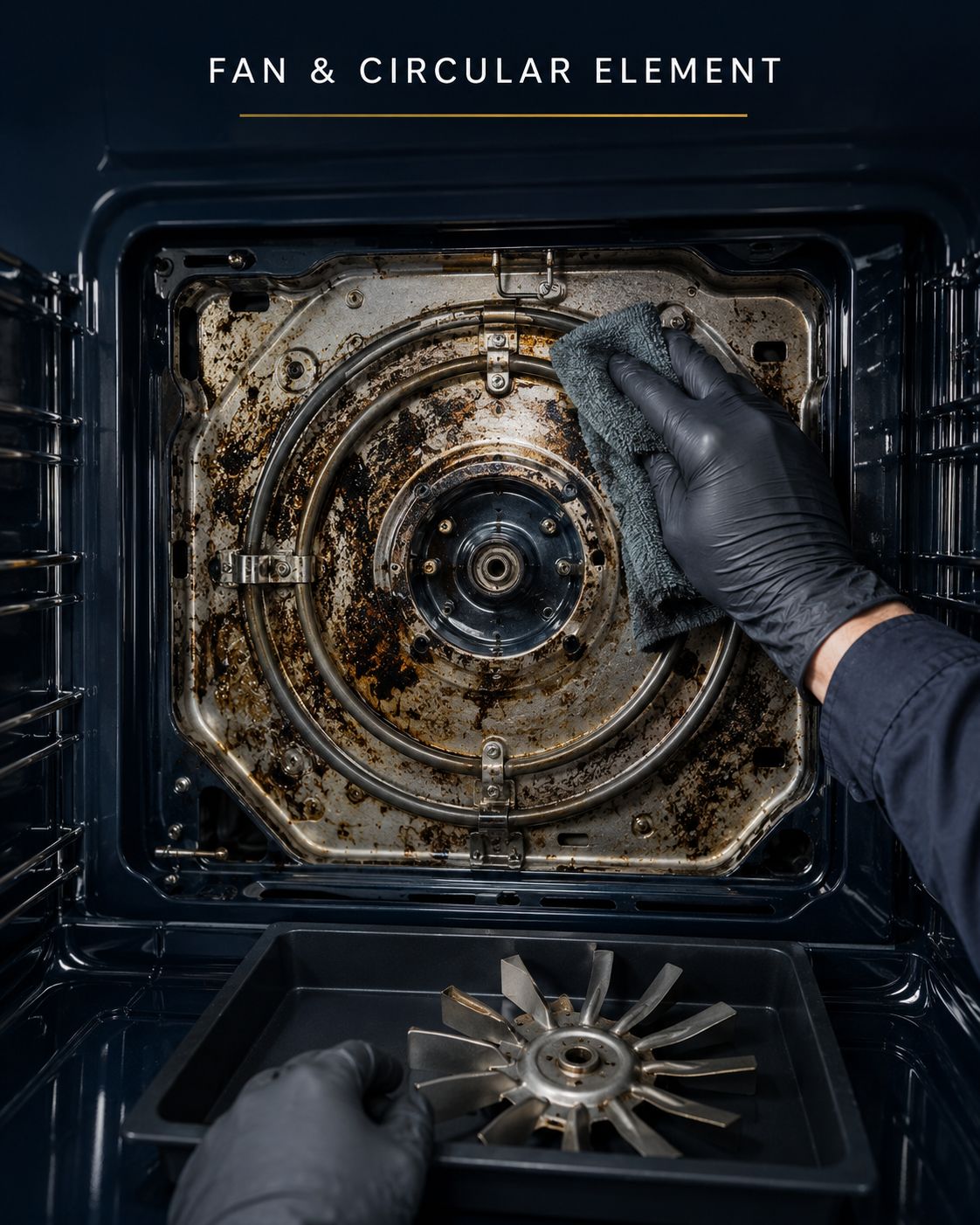
Cleaning the oven fan, rear panel and surrounding circular element area.
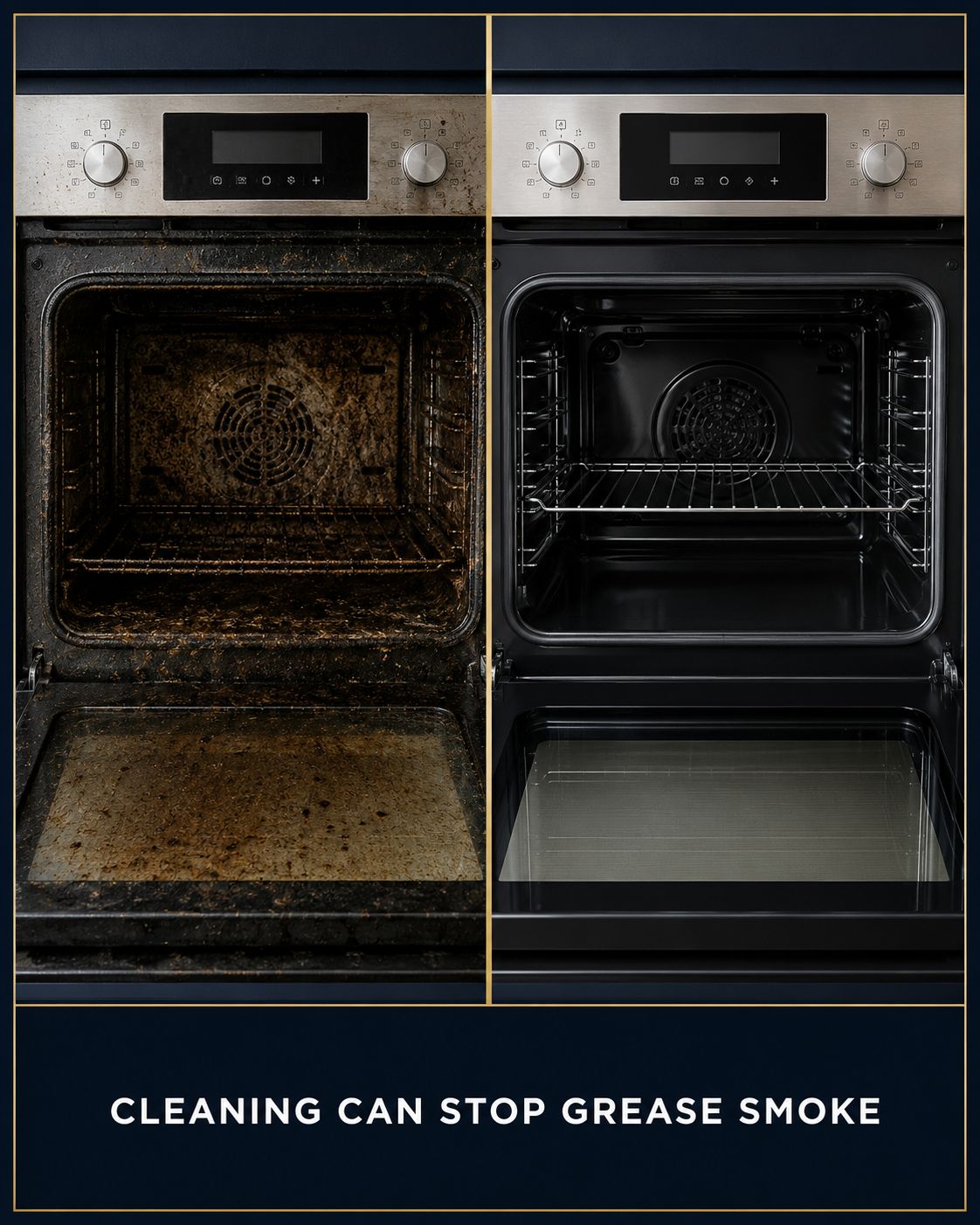
Removing heavy grease and burnt-on food can stop smoke caused by a dirty oven.
Yes. Heavy grease, cooking fat and burnt food are among the most common reasons an oven starts smoking. The deposits become hot every time the oven is used and may eventually begin to burn.
Grease can build up on the oven floor, walls, roof, door edges, trays, side racks and around heating components. Some deposits are easy to see, while others remain hidden underneath removable parts.
Sauces, cheese and food dropped onto the oven floor can burn during later cooking.
Fat from roasting can splash onto the walls, roof, racks and heating areas.
Repeated heating turns older grease into hard, dark deposits that can produce smoke and odours.
Greasy oven trays, shelves and side racks can continue smoking even after the oven walls are wiped.
Allow the oven to cool completely, remove loose food and clean all permitted removable parts. Any cleaning product must be thoroughly rinsed away before the oven is used again. Heavy grease should be removed rather than deliberately burnt off using high heat.